

Summary
In this blog, you'll learn:
- What a printed biometric electrode is and where it sits in the sensor stack
- The main electrode materials: silver, silver/silver chloride (Ag/AgCl), carbon, and proprietary ink blends
- The difference between wet (gel) and dry electrodes
- How do sensing electrodes (ECG, EMG, EEG) differ from stimulating electrodes (EMS, TENS, NMES)
- When to use a single electrode versus an electrode array
- How Butler Technologies, Inc. (BTI) designs and manufactures printed electrodes
Choosing the right electrode material and design is what separates a clean, comfortable, reliable signal from a noisy one, and this guide gives you a clear way to match the two to your application.
In a printed biometric sensor, the electrode is the layer that actually touches the skin. It is the point where the body's electrical activity is picked up, and, in stimulation devices, where electrical energy is delivered back into muscle or nerve. Because the electrode does this critical job, its material and design shape everything about the sensor: signal quality, comfort, durability, and cost.
Not all electrodes are the same. They differ by the conductive material they are printed with, by how they contact the skin, and by whether they record signals or deliver them. This guide breaks down the main types and how to choose between them. For background on the signals these sensors measure, start with our overview first.
What Is a Printed Biometric Electrode?
A printed biometric electrode is a conductive pad, screen-printed onto a thin, flexible film, that forms an electrical connection with the skin. When muscle, heart, or brain activity generates a small voltage, the electrode picks it up so the device can capture and transmit the bioelectric signal. In stimulation applications, the same electrode delivers a controlled current into the body.
In a typical printed sensor stack, the electrode sits between the conductor traces beneath it and the skin above it, often protected by a coverlay and, in some designs, a carbon overprint for wear resistance.
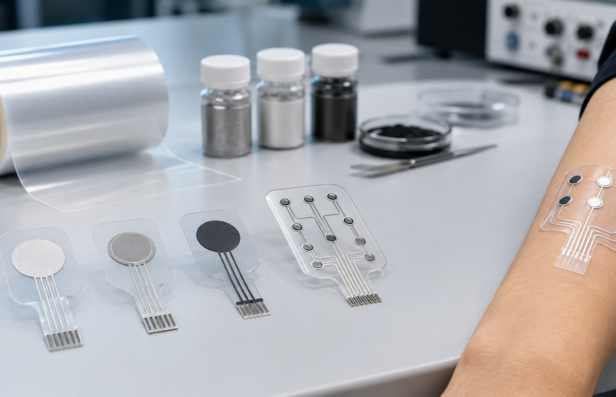
Electrode Types by Material
The most fundamental way electrodes differ is the conductive ink they are printed with. Each material has its own balance of conductivity, stability, cost, and biocompatibility.
Silver (Ag)
Silver is highly conductive and is often used for the conductor traces and, in some designs, the electrode itself. It gives strong signal transfer, but bare silver can be more prone to oxidation, polarization, and skin reactions than silver/silver chloride, so it is frequently paired with an Ag/AgCl or carbon top layer.
Silver/Silver Chloride (Ag/AgCl)
The silver/silver chloride (Ag/AgCl) electrode is the most common choice for biopotential sensing. It is a non-polarized electrode with a very low half-cell potential of about 220 mV, which gives excellent signal stability, strong rejection of motion artifacts, and reliable performance, making it the standard for ECG, EMG, and EEG.
Carbon
Carbon electrodes are chemically inert, corrosion-resistant, and durable. Carbon is often used as an overprint for wear resistance or as the skin-contact surface in stimulation electrodes, because it tolerates repeated current delivery well. Carbon is more polarizable than Ag/AgCl but very stable and cost-effective.
Proprietary Conductive Ink Blends
Many printed electrodes use custom ink blends that combine silver, silver chloride, carbon, and additives to tune conductivity, flexibility, skin comfort, and cost for a specific application. Blended inks let a manufacturer optimize the electrode for the exact signal, skin contact, and durability the product needs.
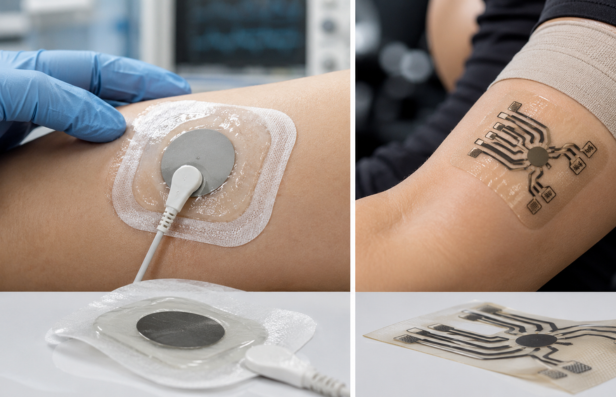
Wet vs Dry Electrodes
Wet (Gel) Electrodes
Wet electrodes use a conductive gel or hydrogel between the electrode and the skin. The gel lowers contact impedance and improves signal quality, which is why wet electrodes are the clinical standard for high-fidelity ECG and diagnostic use. The trade-offs are messiness, limited wear time, and less comfort.
Dry Electrodes
Dry electrodes make direct skin contact with no gel. Screen-printed dry electrodes are ideal for wearables and at-home monitoring because they are comfortable, reusable, and mess-free, and modern printed dry electrodes can achieve signal-to-noise ratios comparable to conventional wet electrodes. They are the enabling technology behind slim, gel-free wearable sensors. Since they are not sticky, dry electrodes are held against the skin by compression garments or tightly strapped medical wearables.
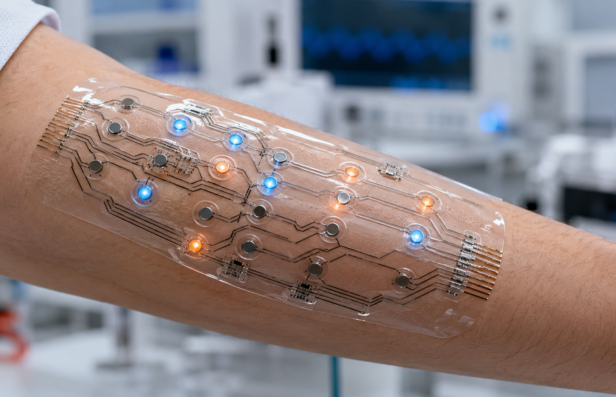
Sensing vs Stimulating Electrodes
Electrodes are also grouped by what they do: record signals or deliver them.
Recording (Sensing) Electrodes
Sensing electrodes capture the body's own electrical activity, including electrocardiography (ECG), electromyography (EMG) for muscle and nerve response, and electroencephalography (EEG) for brain activity. Signal fidelity and motion-artifact rejection matter most here, which is why Ag/AgCl is so common.
Stimulating Electrodes
Stimulating electrodes deliver current into the body for therapy, including EMS for muscle recovery, TENS for drug-free pain relief, and NMES for physical rehabilitation. These electrodes must handle repeated current delivery safely, which is where durable carbon surfaces and carefully engineered ink blends are important.
A key advantage of printed electrodes is that the same flexible platform can be designed to both sense and stimulate, so a single device can monitor and treat.
Single Electrodes vs Electrode Arrays
Finally, electrodes can be used individually (along with a reference/return path) or grouped into arrays. A single electrode is enough when you only need one measurement or stimulation point. An electrode array, several printed electrodes on one flexible circuit, improves coverage, enables signal mapping across a muscle group, and supports more advanced monitoring or targeted stimulation, all in one skin-conforming part.
How to Choose the Right Electrode
Choosing an electrode type comes down to a few questions:
- What signal are you measuring or delivering (ECG, EMG, EEG, EMS, TENS)?
- Does it need clinical-grade fidelity (often wet Ag/AgCl) or wearable comfort (dry, blended inks)?
- How long and how often will it be worn, and does it need to survive repeated use or stimulation?
- What are the comfort, biocompatibility, and cost targets?
The most reliable path is to match the material and construction to the application, then confirm the design through a design for manufacturability review before production.
How Butler Technologies Manufactures Printed Electrodes
At Butler Technologies, Inc. (BTI), printed biometric electrodes are built using screen printing and advanced conductive inks on thin, stretchable TPU films that move with the body. The electrode can be printed from silver, silver chloride, carbon, or a proprietary blend, and can be designed to both sense and stimulate.
Capabilities include:
- Electrode material selection tuned to your signal and skin-contact needs
- Single electrodes and multi-electrode arrays on flexible, stretchable circuits
- Sensing and stimulation designs for ECG, EMG, EEG, EMS, and TENS
- In-house design, prototyping, and full-scale production
Designing a wearable or therapy device? Request a quote from Butler Technologies, and our team will help you select the right electrode or explore our full-scale production capabilities.
Frequently Asked Questions (FAQs)
What materials are printed biometric electrodes made of?
Printed biometric electrodes are made from conductive inks, most commonly silver, silver/silver chloride (Ag/AgCl), carbon, or a proprietary blend. Each material balances conductivity, signal stability, durability, comfort, and cost differently.
What is an Ag/AgCl electrode and why is it common?
A silver/silver chloride (Ag/AgCl) electrode is a non-polarized electrode with a very low half-cell potential of about 220 mV. It offers excellent signal stability and strong rejection of motion artifacts, which makes it the standard choice for ECG, EMG, and EEG sensing.
What is the difference between wet and dry electrodes?
Wet electrodes use a conductive gel to lower skin-contact impedance and are the clinical standard for high-fidelity signals. Dry electrodes make direct skin contact with no gel, which makes them comfortable, reusable, and ideal for wearables, and modern printed dry electrodes can match the signal quality of wet electrodes.
Can a printed electrode both sense and stimulate?
Yes. A key advantage of printed electrodes is that the same flexible platform can be designed to both record signals (ECG, EMG, EEG) and deliver them (EMS, TENS, NMES), so one device can monitor and treat.
Which electrode type is best for ECG, EMG, or EEG?
For recording ECG, EMG, and EEG, silver/silver chloride (Ag/AgCl) is the most common choice because of its low half-cell potential and strong motion-artifact rejection. Wet Ag/AgCl is used for clinical fidelity, while dry printed electrodes are used for comfortable wearable monitoring.
What is an electrode array?
An electrode array is a group of several electrodes printed on one flexible circuit. Arrays improve skin coverage, allow signal mapping across a muscle group, and support more advanced monitoring or targeted stimulation in a single skin-conforming part.