

Summary
Printed biometric sensors measure biometric signals such as ECG, EMG, and EEG using flexible conductive electrodes that conform comfortably to the skin. These sensors detect electrical activity from the heart, muscles, and brain, then process and transmit the data for accurate real-time monitoring across wearable and medical systems.
In this blog, you’ll learn:
- What biometric signals are and why they matter in modern sensor systems
- What types of biometric signals printed sensors can measure, including ECG, EMG, and EEG
- How printed biometric sensors detect bioelectric signals through conductive electrodes
- The difference between ECG heart signals, EMG muscle signals, and EEG brain signals
- How flexible sensor designs improve comfort, skin contact, and signal stability
- Real-world applications in medical devices, rehabilitation, fitness wearables, and industrial monitoring
- Why signal accuracy is critical for reliable biometric sensing performance
- Future trends in wearable sensing, multi-signal monitoring, and connected healthcare devices
Printed biometric sensors play a critical role in advancing wearable healthcare, diagnostics, human performance tracking, and intelligent monitoring systems through lightweight, accurate, and flexible sensing technology.
Biometric signals are at the core of modern wearable technology, medical diagnostics, and human-machine interaction systems. As printed electronics continue to evolve, printed biometric sensors are enabling more accurate, comfortable, and scalable methods for capturing these signals.
Understanding the types of biometric signals these sensors can measure is essential for engineers, product designers, and OEMs developing next-generation medical and wearable devices.
Defining Biometric Signals in Modern Sensor Systems
Biometric signals are measurable physiological data generated by the human body. Most of these signals are electrical in nature and are often referred to as bioelectric signals.
These signals originate from ionic activity across cell membranes and play a critical role in:
- heart function
- muscle contraction
- brain activity
- nerve signaling
At Butler Technologies, we manufacture printed biometric sensors to detect these signals with high precision while maintaining flexibility and long-term wearability.
Types of Biometric Signals Printed Sensors Can Measure
Biometric sensors can capture multiple types of bioelectric signals depending on their design and application.
Key signal categories include:
- cardiac activity signals
- muscle activity signals
- brain wave signals
- physiological response signals
Each signal type varies in amplitude, frequency, and complexity, requiring specialized sensing and signal processing techniques.
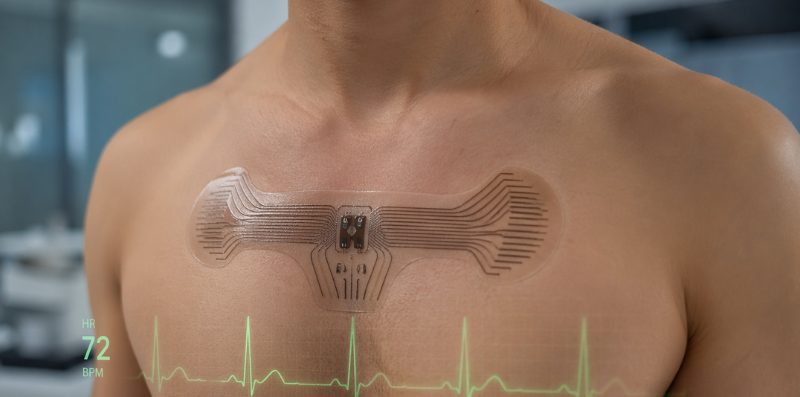
1. ECG Signals and Cardiac Activity Monitoring
ECG signals measure the electrical activity of the heart and are among the most widely monitored biometric signals.
Printed biometric sensors used as heart rate monitoring sensors help track:
- heart rate
- rhythm irregularities
- cardiovascular health trends
Flexible printed electrodes improve signal stability by:
- maintaining consistent skin contact
- reducing motion artifacts
- eliminating the need for conductive gels
2. EMG Signals and Muscle Activity Detection
EMG signals capture electrical activity generated by muscle contractions. These signals are critical in applications such as:
- rehabilitation systems
- prosthetics control
- sports performance tracking
Printed biometric sensors acting as muscle activity sensors provide:
- high sensitivity to muscle activation
- improved signal accuracy during movement
- better comfort for long-duration use
3. EEG Signals and Brain Wave Measurement
EEG signals monitor electrical activity in the brain and are more complex and lower in amplitude compared to ECG and EMG signals.
Printed biometric sensors used as brain wave sensors enable:
- neurological monitoring
- sleep analysis
- cognitive research
- brain-computer interface systems
Because EEG signals are highly sensitive, sensor systems must:
- minimize electrical noise
- maintain stable skin contact
- ensure precise signal acquisition
How Printed Biometric Sensors Detect Bioelectric Signals
The ability to measure biometric signals depends on how effectively sensors interact with the skin and capture electrical activity.
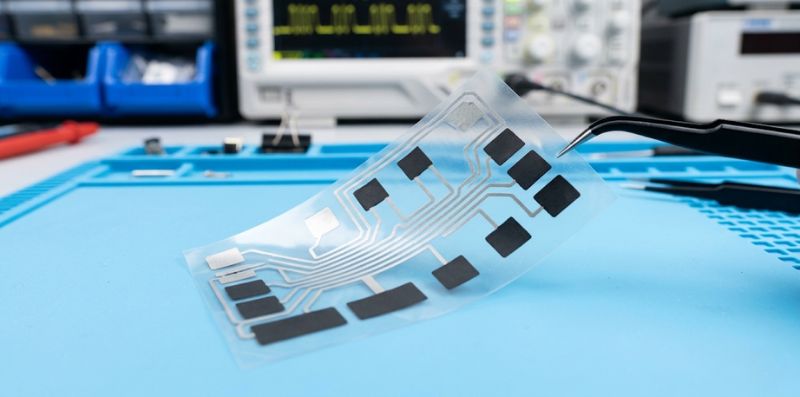
Our printed biometric sensors use:
- screen-printed electrodes
- conductive inks such as silver, silver chloride, and carbon
- Flexible and sometimes stretchable substrates that conform to the body
Signal Detection Process
-
Skin-Electrode Interface: The sensor establishes electrical contact with the skin where bioelectric signals originate.
-
Signal Acquisition: Electrodes detect voltage differences generated by physiological activity.
-
Signal Conditioning: Amplification and filtering improve signal clarity and reduce noise.
-
Data Transmission: Signals are digitized and transmitted for real-time monitoring.
We collaborate with our customers to engineer on these systems to maintain consistent signal quality across dynamic, real-world conditions.
Biometric Signal Monitoring in Wearable Devices
Wearable systems rely heavily on flexible biometric sensors for continuous monitoring.
These systems enable:
- real-time health tracking
- remote diagnostics
- continuous patient monitoring
- improved user comfort
Our flexible sensor designs allow devices to:
- conform to body contours, stretch with movement
- reduce signal noise
- eliminate bulky wiring and the need for messy gels
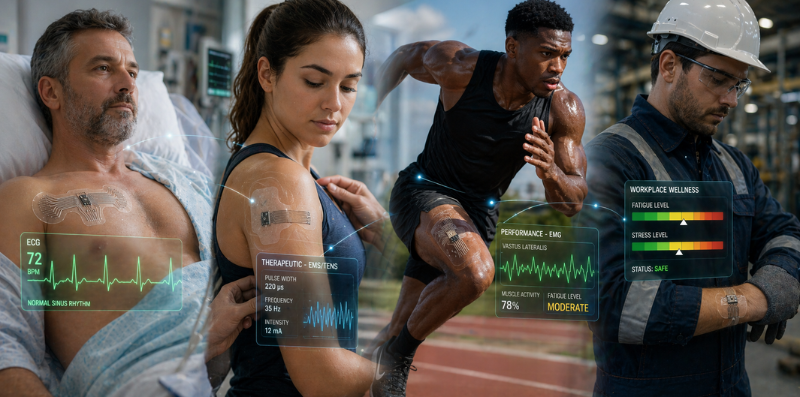
Real-World Applications of Biometric Signal Measurement
The ability to measure different biometric signals supports a wide range of applications.
1. Medical Devices
- cardiac monitoring systems
- neurological diagnostics
- rehabilitation equipment
2. Therapeutic Systems
- EMS for muscle stimulation
- TENS for pain management
3. Sports and Fitness
- performance tracking
- muscle fatigue monitoring
4. Industrial and Safety Monitoring
- worker fatigue detection
- physiological stress monitoring
We develop custom printed sensor solutions to match the technical and performance requirements of each application.
Why Signal Accuracy Matters in Biometric Sensing
Accurate signal capture is critical for reliable system performance and decision-making.
Key factors affecting signal accuracy include:
- skin contact consistency
- electrical noise and interference
- electrode material performance
- motion artifacts
Well-designed printed sensors improve accuracy by:
- maintaining stable skin contact
- minimizing external interference
- adapting to dynamic movement conditions
Understanding the Future of Biometric Signal Detection
The future of biometric signal detection lies in the convergence of advanced materials, flexible electronics, and connected healthcare systems.
Key trends include:
- multi-signal sensing within a single device
- improved conductive ink technologies
- seamless wireless integration
- enhanced wearable comfort and durability
As these technologies evolve, printed biometric sensors will continue to expand their role across medical, industrial, and consumer applications. At Butler Technologies, Inc., we continue to advance printed sensor solutions that support this shift toward more connected, comfortable, and reliable monitoring systems.
Frequently Asked Questions (FAQs)
What are biometric signals?
Biometric signals are electrical or physiological data generated by the human body, including heart activity, muscle movement, and brain waves.
What types of biometric signals can sensors measure?
Sensors can measure ECG, EMG, EEG, and other physiological signals such as heart rate and muscle activity.
How do printed biometric sensors work?
They use conductive ink electrodes to detect electrical signals, then amplify, filter, and transmit the data for analysis.
What is the difference between ECG EMG and EEG?
ECG measures heart activity, EMG measures muscle activity, and EEG measures brain activity.
Where are printed biometric sensors used?
They are used in medical devices, wearable systems, rehabilitation equipment, and industrial safety monitoring.