Advanced Printed Technology
Custom Screen-Printed Electronics for Sensing, Heating, and Control.
Advanced printed technology, also called printed electronics, replaces large rigid circuit boards with ultra-thin circuits printed directly onto flexible film. That makes it possible to add sensing, heating, and control to products that need to be thin, lightweight, curved, or worn on the body.
Advanced printed technology manufactured at Butler Technologies includes biometric sensors, force sensing resistors, flexible heaters, and more custom printed electronics.

TOO THIN FOR A CIRCUIT BOARD?
How Printed Electronics Are Made
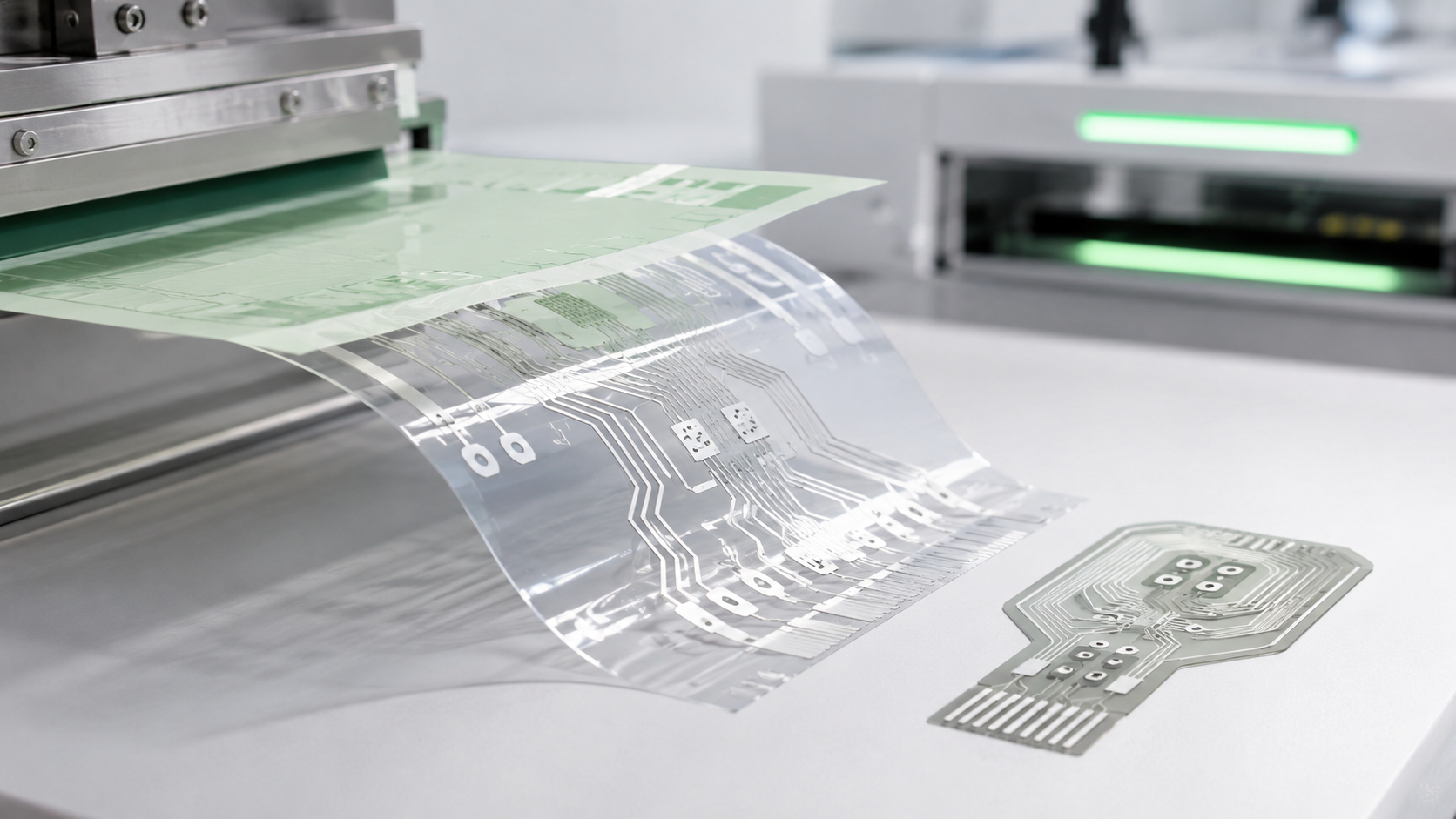
Printed electronics manufacturing works differently from a rigid board. Instead of etching copper, screen printing electronics builds the circuit by laying conductive and dielectric inks in layers onto a flexible substrate. Each layer is printed, cured, and registered to the next, then the finished circuit is cut to shape and prepared for assembly.
- Screen printing conductive traces and electrodes
- Printing dielectric (insulating) layers to separate circuits
- Curing and quality inspection between layers
- Precision cutting and value-added assembly
Printed Electronics Materials, Inks & Substrates
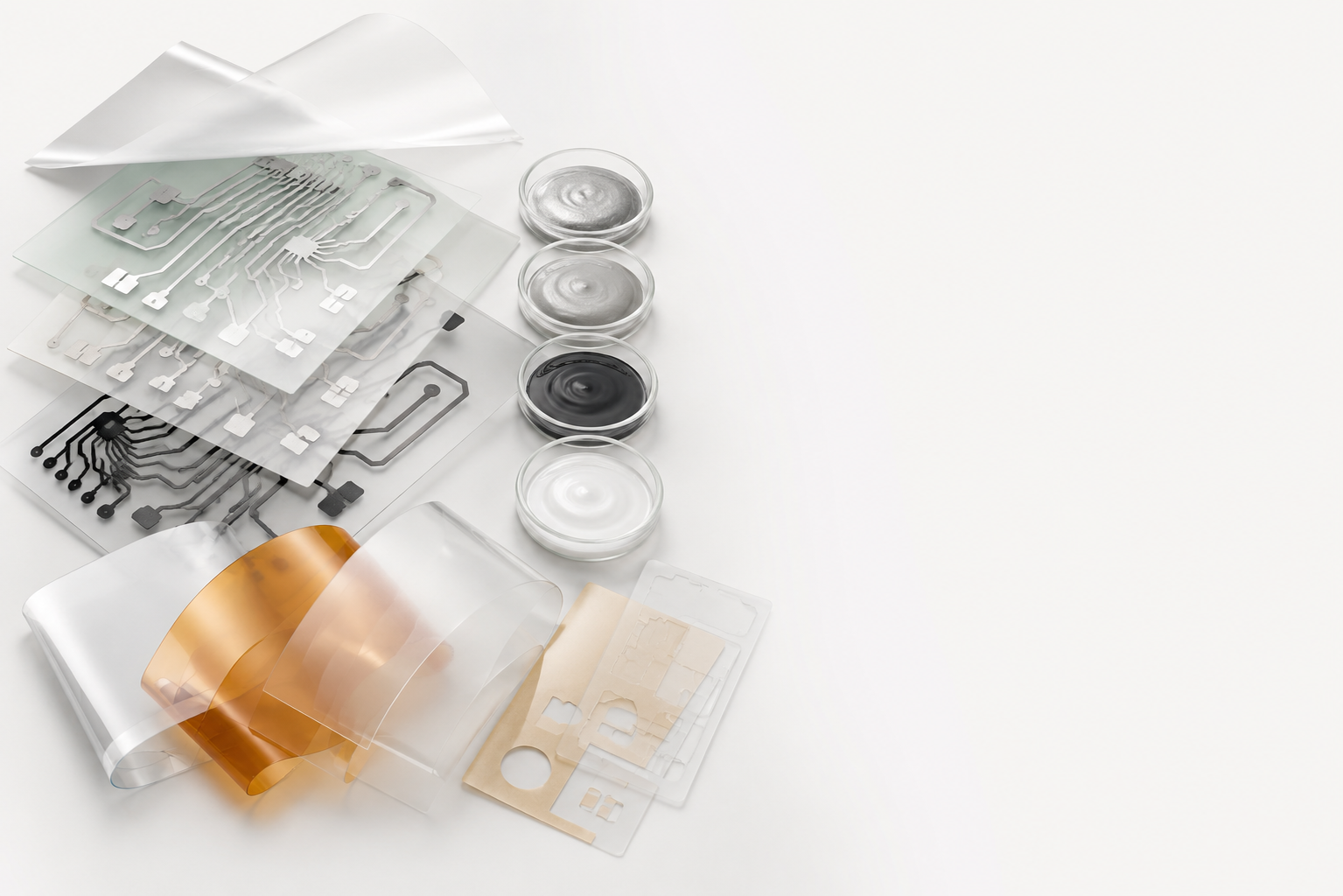
Performance comes down to the printed electronics materials you choose: the ink and substrate pairing determines conductivity, flexibility, and durability. We select and qualify both, along with the printed electronics components in your assembly, for your environment and end use:
- Conductive inks such as silver/silver chloride (Ag/AgCl), and carbon
- Dielectric (insulating) inks to isolate layers
- Flexible substrates including polyester (PET), polyimide, and TPU for stretch and wear
- Adhesives and overlaminates for durability and skin contact
A Collaborative Approach
Developing next-generation printed technology takes more than one specialist—it takes the right team of partners. At Butler Technologies, INC. (BTI), we work best with organizations that already have a clear product vision and need a proven manufacturing partner to bring it to life.
What You Bring
- Your manufacturing-ready design
- Project leadership
- A software or garment specialist
What We Bring
- 30+ years of experience in manufacturing
- Skilled team of engineers and graphic artists
- Technical screen-printing expertise
Applications & Uses
- Medical devices and disposable sensors
- Wearables, apparel, and soft goods
- Automotive interiors and seat sensing
- Industrial controls and equipment
- Consumer electronics and white goods
NEED CUSTOM PRINTED ELECTRONICS?
Industries We Serve
Our products and capabilities support a wide range of industries, each requiring precise manufacturing, reliable performance, and consistent quality across every application.
Why Choose Butler Technologies
ISO 9001 Certified
On-Time Delivery
Design to Production
Supply Chain Simplified
Expert Team
Custom Capabilities
EVERY CLAIM ABOVE IS AUDITED
What Our Clients Say
Frequently Asked Questions
How is printed electronics different from a traditional circuit board?
A traditional PCB is rigid and etched from copper. Printed electronics are printed in layers onto flexible film, so they can be thin, lightweight, curved, and even worn on the body.
What products can be made with printed electronics?
Common examples include printed sensors, biometric sensors, force sensing resistors, flexible heaters, printed antennas, and flexible circuits for user interfaces.
What is a biometric sensor?
A biometric sensor measures a signal from the body. In printed electronics, that usually means a printed electrode placed against the skin that picks up bioelectrical signals such as ECG (heart), EMG (muscle), or EEG (brain) for health, fitness, and medical devices.
What is a force sensing resistor?
A force sensing resistor (FSR), also called a force sensitive resistor, is a thin film pressure sensor whose resistance changes as force is applied, letting a device measure touch, pressure, or load.
What is a flexible heater?
A flexible heater is a printed heating element on a thin, bendable substrate such as polyimide (Kapton) or silicone, used to deliver controlled warmth in wearables, medical devices, and equipment.
What inks and materials are used?
Conductive inks such as silver, silver/silver chloride, and carbon, plus dielectric inks for insulation, are printed onto substrates like polyester, polyimide, or TPU.
Can printed circuits flex or stretch?
Yes. Depending on the substrate and ink system, printed circuits can bend, conform to curved surfaces, and in some cases, stretch for wearable applications.
Do I need a finished design before working with you?
We work best with partners who bring a manufacturing-ready design and project leadership, but our engineers can review your design for manufacturability and recommend materials and processes.
Can you take a printed electronics prototype into full-scale production?
Yes. We validate materials and print processes during prototyping, then document and transfer them into repeatable full-scale production.
What happens after Butler Technologies prints my circuit?
BTI prints and fabricates the sensor or heater circuit. Building the sub-assemblies around it, including wire leads, connectors, battery packs and assembly to foams or fabric, sits with you or a third party contractor, as does final device assembly. Knowing that split early avoids surprises when a project moves from prototype toward production.
Do you get early access to new inks and materials?
Yes. Through strategic partnerships with ink and material suppliers, Butler Technologies participates in product development and testing, which often leads to early and sometimes exclusive access to new and improved materials.
Where to start
With all the different customization options and use cases, it might seem overwhelming.
Contact our expert team today and take the pressure off yourself.