

In industrial environments, branding is rarely discussed, yet it is constantly experienced. Every control panel, interface, and machine touchpoint communicates something about the manufacturer behind it. Graphic overlays and labels are often seen as functional necessities, but in reality, they are one of the most powerful tools for reinforcing brand identity in industrial products.
For OEMs and product engineers, the interface is where performance meets perception. A well-designed graphic overlay does more than display icons or instructions. It establishes trust, consistency, and professionalism every time a user interacts with the product.
This is why graphic overlay and labels play a strategic role far beyond aesthetics.
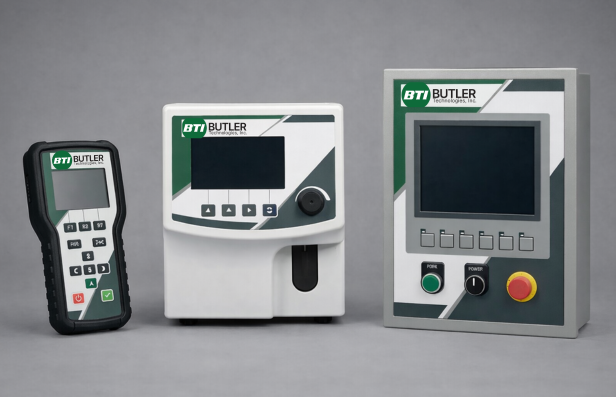
Branding in Industrial Products Starts at the Interface
Industrial branding does not rely on logos alone. In many cases, the control panel is the only visible brand touchpoint the end user interacts with daily. This is especially true in medical devices, industrial machinery, laboratory equipment, and automation systems.
A poorly designed interface sends unintended signals:
- Unclear graphics suggest poor usability
- Inconsistent colors weaken brand recognition
- Low-quality materials raise concerns about reliability
By contrast, a refined industrial graphic overlay creates immediate confidence. It tells the user the product was engineered thoughtfully, tested rigorously, and built by a manufacturer that values precision.
This is the foundation of industrial control panel branding.
How Graphic Overlays Reinforce Brand Identity
So, how do graphic overlays reinforce brand identity in practice?
It happens through consistency, repetition, and clarity.
Graphic overlay design allows manufacturers to standardize how their brand appears across multiple product lines. Fonts, icon styles, color systems, textures, and layouts can be engineered to align with broader brand guidelines. When this consistency carries across devices, it builds familiarity and trust.
Key branding elements embedded into overlays include:
- Brand-specific color palettes
- Consistent iconography and typography
- Recognizable button shapes and layouts
- Clear hierarchy of information
Over time, users begin to recognize a product before reading the logo. This is brand recognition built through interface design.
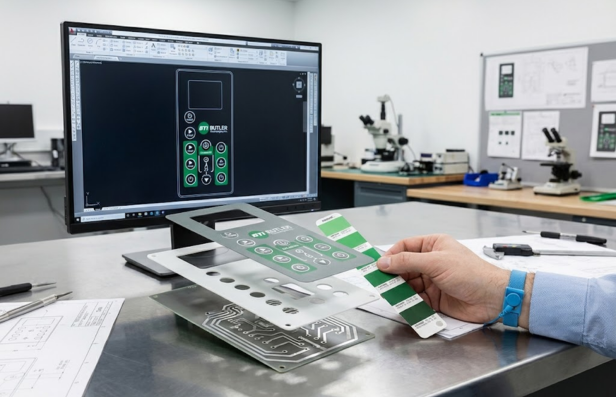
The Dual Role of Graphic Overlays: Function and Brand
One of the biggest misconceptions is that branding compromises function. In reality, high-quality custom graphic overlays strengthen both.
An effective overlay must:
- Guide users intuitively
- Reduce operational errors
- Remain readable in harsh environments
- Maintain tactile clarity
When branding is engineered into the interface rather than added on top, it enhances usability instead of distracting from it.
For example:
- High contrast brand colors can improve readability
- Consistent icon placement reduces learning curves
- Branded tactile zones improve user confidence
This balance between function and brand is where experienced manufacturers excel.
Custom Graphic Overlays for OEMs and Industrial Equipment
Generic overlays limit brand expression. Custom graphic overlays allow OEMs to align the interface with their exact product and market positioning.
Customization options include:
- Unique layout architectures
- Brand-aligned embossing and textures
- Backlighting effects that match brand tone
- Material selections that support long-term durability
In industrial settings where exposure to chemicals, UV radiation, and abrasion is common, choosing the right overlay construction becomes critical. Manufacturers designing for these conditions often reference best practices outlined in this guide on industrial graphic overlays designed for chemicals, UV, and abrasion to ensure performance and longevity.
Custom industrial labels and overlays also support regulatory compliance while maintaining brand consistency. Warnings, certifications, and instructions can be integrated cleanly without cluttering the interface.
This level of control is critical for companies' branding of industrial products across multiple industries or regions.
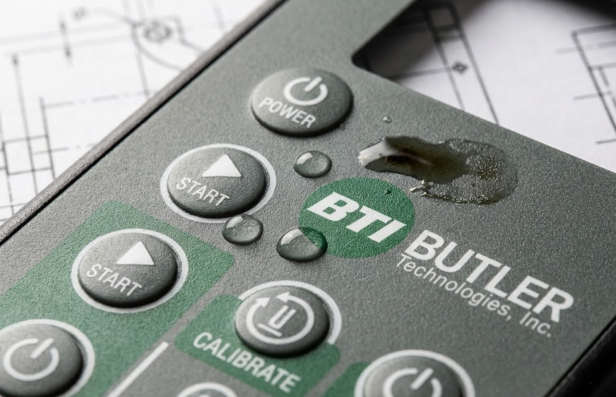
Materials and Finishes That Support Brand Perception
Brand perception is not just visual. It is tactile and experiential.
Industrial graphic overlay materials must withstand chemicals, UV exposure, abrasion, and repeated actuation. When overlays degrade, branding degrades with them.
Common material choices include:
- Polyester overlays for high-cycle applications
- Hard-coated polycarbonate for optical clarity
- Matte textures to reduce glare and improve visibility
- Chemical-resistant inks for medical and industrial cleaning
Durability directly reinforces brand credibility. A control panel that looks new after years of use reflects engineering excellence.
If you're not sure whether to choose polyester or polycarbonate? Read our complete guide on choosing the right material for Your Graphic Overlay.
Why Graphic Overlays Are Important for Industrial Branding
Why are graphic overlays important for industrial branding? Because they influence how users judge product quality long before performance is measured.
End users subconsciously associate interface quality with product reliability. Clear labeling reduces training time. Consistent layouts reduce errors. Durable surfaces reinforce trust.
In regulated industries like medical, diagnostic, and industrial automation, these signals matter. Branding through the interface becomes part of the user experience and part of the product’s reputation.
Partnering With the Right Overlay Manufacturer
Brand reinforcement through overlays does not happen by accident. It requires collaboration between engineering, design, and manufacturing.
At Butler Technologies, Inc., graphic overlays and labels are approached as engineered components, not decorative add-ons. Every overlay is developed with an understanding of:
- Electrical integration
- Material science
- Environmental exposure
- Brand alignment
This end-to-end approach ensures that branded graphic overlays perform consistently from the first unit to full production.
Branding That Works Where It Matters Most
Graphic overlays and labels sit at the intersection of engineering, usability, and brand identity. When designed intentionally, they become a powerful extension of a manufacturer’s brand, reinforcing trust every time the product is used.
For OEMs and industrial manufacturers, investing in well-engineered graphic overlay design is not a cosmetic decision. It is a strategic one.