

Graphic overlays function as the user-facing interface on medical devices, industrial controls, automotive systems, and electronic equipment. These thin printed layers carry essential labels, icons, branding, display windows, and tactile features, while protecting sensitive electronics beneath. When an overlay fails, the entire device risks usability issues, safety concerns, and costly field replacements.
For OEMs and engineers working in regulated or high-stakes sectors, selecting the right graphic overlay manufacturer is not optional. Reliability comes from disciplined processes, controlled material selection, advanced printing technologies, and certified quality systems. This guide explains what defines a dependable overlay manufacturer and why the right partner ensures consistent long-term performance.
Quality Assurance: Consistency, Inspection, and Full Traceability
Reliability begins with a manufacturer whose quality practices are engineered into every step of production, not just validated at the end.
1. Printing Consistency
Leading manufacturers maintain strict control over:
- Pantone and colour accuracy
- Ink deposition and opacity
- Surface uniformity
- Multi-layer registration
- Repeatability across large batches
Using tools like spectrophotometers, they ensure every overlay in a lot looks identical.
2. In-Process and Final Inspections
High-end suppliers conduct rigorous checks throughout production. These include:
- Print and cure validation
- Adhesive application inspection
- Layer alignment checks
- Dimensional verification after cutting
- Visual, adhesion, and functional testing
This systematic approach reduces defects and ensures overlays perform as intended in the field.
3. Traceability and Documentation
Complete traceability is non-negotiable for medical, automotive, and industrial customers. Top manufacturers track:
- Material lot numbers
- Ink batches
- Adhesive codes
- Process parameters
- Quality control results
This supports regulatory audits, speeds root-cause analysis, and ensures a stable, repeatable supply chain.
Material Engineering: PET, Polycarbonate, Coatings, and Adhesives
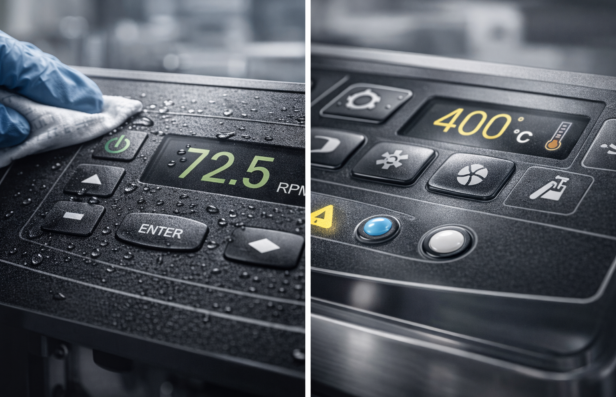
Material selection directly influences overlay longevity, clarity, chemical resistance, and usability.
1. Polyester (PET)
PET is used in demanding environments because it offers:
- Excellent chemical resistance
- Strong dimensional stability
- High fatigue resistance for repeated button activation
- Better ageing and heat tolerance
This makes PET the preferred option for medical equipment, industrial instruments, and environments requiring harsh cleaning.
2. Polycarbonate (PC)
PC is selected for overlays that need clarity or complex forming. Key benefits include:
- High optical clarity
- Strong impact resistance
- Easy embossing and forming
- Clean die-cutting for intricate shapes
Since PC lacks chemical resistance on its own, high-end manufacturers add hardcoats to improve durability.
3. Protective Coatings and Textures
Top producers apply coatings to protect overlays from long-term wear. These include:
- Hardcoats for scratch resistance
- UV-resistant coatings for outdoor durability
- Textured finishes for anti-glare or improved readability
These enhancements maintain legibility and prevent yellowing, haze, or surface damage.
4. Adhesive System Engineering
The adhesive layer must bond the overlay securely to the device. High-performance adhesives are engineered to:
- Resist temperature fluctuations
- Prevent edge lifting and bubbling
- Maintain adhesion during cleaning
- Support moisture and dust sealing
Selecting the right adhesive is one of the most critical steps in overlay reliability.
Printing Precision: Screen Printing, Digital Printing, and Tight Tolerances
Visual clarity, alignment, and long-term durability depend on controlled printing processes and precise finishing.
1. Screen Printing
Screen printing remains the gold standard for rugged overlays because it produces:
- Thick, durable ink layers
- Perfect Pantone matching
- Strong opacity and solid color fields
- Excellent resistance to UV exposure and repeated cleaning
Ideal for high-volume and industrial applications.
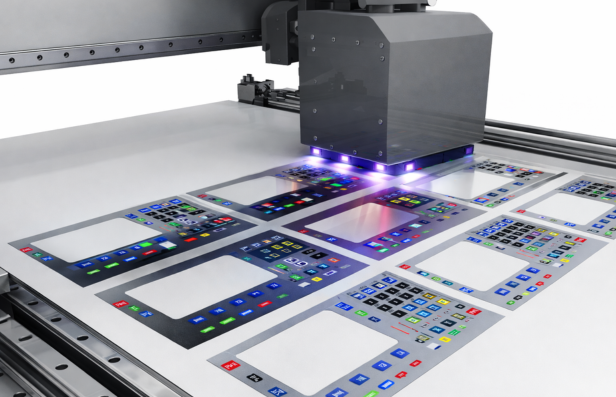
2. Digital Printing
Modern UV digital printing is used for:
- High-resolution imagery
- Gradients and photo-quality graphics
- Low- to medium-volume production
- Rapid prototyping and artwork changes
Digital overlays are typically top-coated to enhance durability and environmental resistance. For an in-depth comparison, explore Digital vs. Screen Printing.
3. Tolerance and Registration Control
Manufacturers must hold exact tolerances so the overlay aligns with underlying buttons, LEDs, and displays. This requires:
- High-precision registration during printing
- CNC die-cutting or laser cutting
- Burr-free edges
- Dimensional repeatability across batches
Quality overlay manufacturers combine advanced equipment and skilled technicians to achieve consistent accuracy.
Environmental Durability: UV, Chemical, and Abrasion Resistance
Graphic overlays must withstand real-world stress, not just controlled lab conditions. Durability is engineered through material selection and testing.
1. UV Exposure Protection
Outdoor and automotive overlays require UV-resistant materials to prevent:
- Fading
- Yellowing
- Brittleness
UV-stable films and protective coatings ensure long-term clarity.
2. Chemical and Moisture Resistance
Medical and industrial environments expose overlays to disinfectants, oils, solvents, and moisture. Premium overlays use:
- Chemical-resistant PET films
- Hardcoats or varnishes
- Adhesives and gaskets designed for ingress protection
These ensure the overlay stays intact through repeated sterilization or exposure to harsh chemicals.
3. Abrasion and Wear Resistance
Overlays must survive thousands of button presses and daily cleaning. High-quality materials and coatings prevent:
- Scratches
- Legend wear
- Surface cracking
- Emboss deformation
Longevity is validated through abrasion, chemical soak, and thermal cycling tests.
Certifications and Compliance: UL, RoHS, ISO 9001
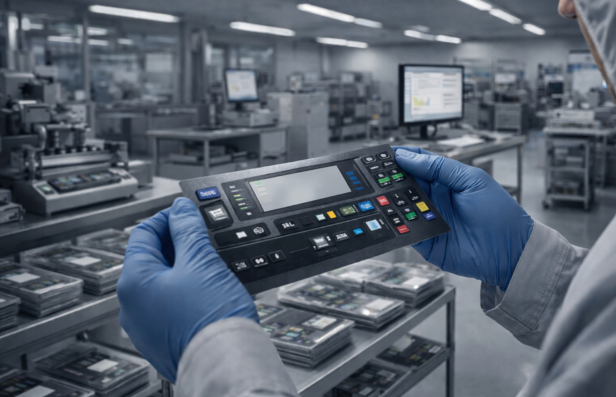
Certifications demonstrate that a manufacturer meets industry-specific requirements for safety, performance, and consistency.
1. UL Recognition
UL 969 and related programs validate marking durability, adhesion, and performance under stress. Using UL-recognised materials simplifies OEM product approvals.
2. RoHS Compliance
RoHS-compliant films, inks, and adhesives ensure overlays meet global safety and environmental requirements.
3. ISO 9001
- ISO 9001 certifies strong general quality control.
These certifications indicate structured processes and predictable reliability.
Why Butler Technologies Is a Trusted Partner for High-Reliability Overlays
Not all overlay manufacturers operate at a high standard. Commodity suppliers often cut corners in materials, printing, or documentation. Butler Technologies, Inc. stands out because it invests in the processes and quality systems required for mission-critical industries.
BTI delivers:
- ISO 9001
- Precision screen printing and UV digital printing
- Expertise in PET, PC, hardcoats, adhesives, and specialised coatings
- Strict process control and inspection
- Precision die-cutting and tight registration accuracy
- Collaborative engineering support through every project phase
The result is consistent, durable overlays that integrate seamlessly with your device and withstand real-world use.
Build Reliable Interfaces with a Trusted Manufacturer
Graphic overlays may appear simple, but they are engineered components critical to user experience, branding, safety, and device longevity. Partnering with a proven manufacturer ensures the overlay performs flawlessly, maintains clarity, and resists environmental stress for years.
If you’re developing a new device or refining an existing design, Butler Technologies can support your engineering, material selection, and production needs. Contact the team to discuss your next project or request a quote.