---
title: What Is Design for Manufacturing? Meaning, Process, Benefits Explained
description: ""
image: https://butlertechnologies.com/hubfs/192.jpg
---
[](https://butlertechnologies.com/)
- Who We Are
- [About Us](https://butlertechnologies.com/about-us)
- [Careers](https://butlertechnologies.com/careers)
- [Certifications & Approvals](https://butlertechnologies.com/certifications-approvals)
- What We Do
- What Services We Offer
- [Full-Scale Production](https://butlertechnologies.com/full-scale-production)
- [Design](https://butlertechnologies.com/design)
- [Innovation & Prototyping](https://butlertechnologies.com/innovation-prototyping)
- [Our User Interface Components](https://butlertechnologies.com/user-interface-components)
- [Membrane Switches & Keypads](https://butlertechnologies.com/membrane-switches)
- [Graphic Overlays & Labels](https://butlertechnologies.com/graphic-overlays)
- [Dials & Gauges](https://butlertechnologies.com/dials-gauges)
- [Touch Screens](https://butlertechnologies.com/touch-screens)
- [Gaskets, Filters, Barriers](https://butlertechnologies.com/gaskets-filters-barriers)
- [Our Advanced Printed Technology](https://butlertechnologies.com/advanced-printed-technology)
- [Biometric Sensors](https://butlertechnologies.com/biometric-sensors)
- [Force Sensing Resistors](https://butlertechnologies.com/force-sensing-resistors)
- [Flexible Heaters](https://butlertechnologies.com/flexible-heaters)
- Why Choose Us
- [Industry Experience](https://butlertechnologies.com/industries)
- [Customer Journey](https://butlertechnologies.com/customer-journey)
- [Customer Satisfaction](https://butlertechnologies.com/customer-satisfaction)
- [Custom Capabilities](https://butlertechnologies.com/custom-capabilities)
- [Certifications & Approvals](https://butlertechnologies.com/certifications-approvals)
- Resources
- [Blog](https://butlertechnologies.com/blog)
- [News](https://butlertechnologies.com/blog/tag/news)
- [Downloadable Resources](https://butlertechnologies.com/downloadable-resources)
- [For Customers](https://butlertechnologies.com/customer-resources)
- [FAQs](https://butlertechnologies.com/faqs)
- [Contact Us](https://butlertechnologies.com/contact-us)
- [Request A Quote](https://butlertechnologies.com/request-quote)
# Blog & News
# What Does Design for Manufacturing Mean
Posted by [Mike Wagner](https://butlertechnologies.com/blog/author/mike-wagner) on May 07, 2026

Mike Wagner is the Chief Innovation Officer at Butler Technologies, Inc. He leads technical discovery, evaluates emerging materials and technologies, and translates customer needs into solutions across BTI's User Interface and Printed Electronics product lines. When he's not driving innovation at BTI, he enjoys traveling, fishing, and music.
Find me on:
[LinkedIn](https://www.linkedin.com/in/michaelwagner2023/)
- [Tweet](https://twitter.com/share)
## Summary
Design for Manufacturing is not just a design approach, it’s a business advantage.
In this blog, you learned:
- What design for manufacturing is and why it matters
- How DFM integrates design with production realities
- Key principles and guidelines for manufacturable design
- The difference between DFM and DFA
- How DFM reduces costs and improves efficiency
- Real-world applications, including printed electronics
When applied correctly, DFM ensures that your product is not just innovative—but manufacturable, scalable, and successful.
---
Most products fail long before they reach the market, not because of poor ideas, but because they were never designed to be manufactured efficiently.
That’s where Design for Manufacturing becomes critical.
If you’re building anything, from industrial components to printed electronics, understanding what design for manufacturing is is not optional. It directly impacts cost, quality, scalability, and time to market.
In this guide, we’ll break down the design for manufacturing meaning, how it works in real engineering environments, and how it can transform your production outcomes.
## What Is Design for Manufacturing?
[Design for Manufacturing (DFM)](https://butlertechnologies.com/design) is an engineering approach focused on designing products in a way that makes them easy, cost-effective, and efficient to manufacture.
Instead of designing first and worrying about production later, DFM integrates manufacturing constraints directly into the design phase.
### In simple terms:
DFM ensures that a product can be:
- Manufactured with minimal complexity
- Produced at a lower cost
- Built with consistent quality
- Scaled efficiently
## DFM Meaning in Engineering
In engineering, DFM's meaning goes beyond theory. It is a practical framework that bridges the gap between design and production.
It involves:
- Selecting the right materials based on manufacturing methods
- Simplifying geometries to reduce tooling complexity
- Designing components that align with real-world production capabilities
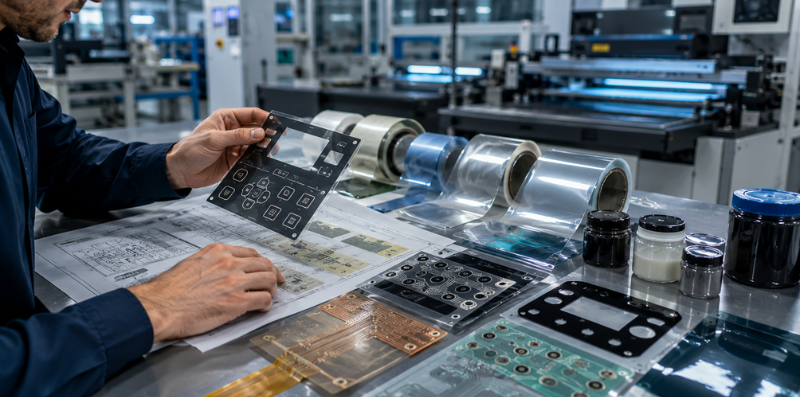
For example, in [printed electronics](https://butlertechnologies.com/advanced-printed-technology):
- Trace widths, ink selection, and substrate compatibility must align with screen printing or digital printing capabilities
- Overly complex layouts can increase defect rates and reduce yield
DFM ensures the design works not just on paper, but on the production floor.
Material selection is especially important in components like graphic overlays, where durability, surface finish, environmental resistance, and print compatibility directly affect long-term performance.
Understanding the [materials used in graphic overlays](https://butlertechnologies.com/blog/material-use-graphic-overlay) for printed electronics applications can help engineers make more manufacturable, cost-effective design decisions.
## Design for Manufacturing Process
The [design for the manufacturing](https://butlertechnologies.com/blog/tag/manufacturing-design) process is not a single step. It is an iterative workflow integrated into product development.
Typical DFM workflow:
### 1. Concept Design
- Initial product idea and functionality defined
- Early feasibility considerations
### 2. Material Selection
- Choose materials compatible with manufacturing methods
- Consider durability, cost, and availability
### 3. Design Simplification
- Reduce part count
- Eliminate unnecessary complexity
### 4. Process Alignment
- Match design with manufacturing capabilities such as printing, forming, or cutting
### 5. DFM Analysis
- Evaluate cost drivers
- Identify production risks
- Optimize tolerances
### 6. Prototyping and Testing
- Validate manufacturability
- Identify design improvements
### 7. Production Optimization
- Final refinements for scale
## DFM in Product Design
DFM in product design means designing with production realities in mind from day one.
**Instead of asking:** Can we manufacture this?
You design so that the answer is already yes.
### Key focus areas:
- Manufacturable geometries
- Standardized components
- Efficient assembly
- Minimal material waste
In industries like [medical devices](https://butlertechnologies.com/blog/user-interface-trends-medical-devices) or [HMI systems](https://butlertechnologies.com/blog/tag/hmi), this becomes even more critical where reliability and repeatability are essential.
## Design for Manufacturing Principles
Strong design for manufacturing principles is what separates scalable products from costly failures.
### Core principles include:
- **Simplification:** Reduce part count and complexity
- **Standardization:** Use common materials and components
- **Tolerance Optimization:** Avoid overly tight tolerances that increase cost
- **Material Efficiency:** Minimize waste and optimize usage
- **Process Compatibility:** Design specifically for the chosen manufacturing method
- **Error Reduction:** Make designs less prone to defects
## Design for Manufacturing Guidelines
Applying design for manufacturing guidelines early can prevent expensive redesigns later.
### Practical DFM guidelines:
- Avoid complex geometries that require specialized tooling
- Design parts that are easy to assemble and align
- Use uniform thickness where applicable
- Minimize the number of manufacturing steps
- Select materials that are readily available and cost-effective
- Design for repeatability and consistency
## DFM Analysis: Why It Matters
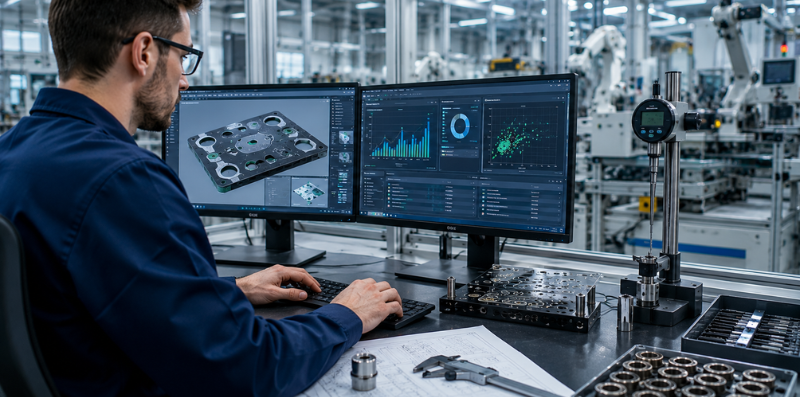
DFM analysis is where theoretical design meets real-world validation.
It evaluates:
- Manufacturing cost
- Production feasibility
- Risk of defects
- Cycle time
### What DFM analysis helps identify:
- Cost drivers in design
- Areas of over-engineering
- Opportunities for simplification
- Potential production bottlenecks
## Design for Manufacturing Examples
To understand design for manufacturing examples, let’s look at real scenarios:
### Example 1: Printed Electronics
- Optimizing conductive trace layouts for screen printing
- Reducing layer complexity in [membrane switches](https://butlertechnologies.com/membrane-switches)
- Selecting inks compatible with curing processes
### Example 2: Mechanical Components
- Designing parts with standard hole sizes
- Reducing the number of fasteners
### Example 3: Consumer Products
- Snap-fit designs replacing screws
- Modular components for easier assembly
In printed electronics and HMI applications, design flexibility is an important part of Design for Manufacturing. Features such as insertable legends in [custom membrane switch design](https://butlertechnologies.com/blog/custom-membrane-switch-design-flexibility-with-insertable-legends) help OEMs simplify updates, reduce inventory complexity, and improve long-term product adaptability without requiring complete overlay redesigns.
This approach supports more efficient manufacturing workflows while maintaining consistent interface quality across production runs.
**Design for Manufacturing vs Design for Assembly**
A common confusion is design for [manufacturing vs design](https://www.solidworks.com/media/differences-between-design-and-manufacturing) for assembly.
### The difference:
- DFM focuses on how parts are made
- DFA focuses on how parts are assembled
### Together:
DFM and DFA create an optimized production system
Ignoring either leads to inefficiencies.
## Benefits of Design for Manufacturing
The benefits of design for manufacturing are direct and measurable.
### Key advantages:
- Lower production costs
- Faster time to market
- Higher product quality
- Improved scalability
- Reduced manufacturing defects
- Better supplier alignment
## How to Reduce Manufacturing Costs with DFM
If your goal is cost reduction, DFM is one of the most effective strategies.
### How to reduce manufacturing costs with DFM:
- Reduce part count
- Simplify design geometry
- Use standard materials
- Optimize tolerances
- Minimize waste
- Design for automation
Cost savings come from decisions made early, not after production starts.
## Importance of Design for Manufacturing in Engineering
The importance of design for manufacturing in engineering cannot be overstated.
Without DFM:
- Designs become expensive to produce
- Quality becomes inconsistent
- Scaling becomes difficult
With DFM:
- Engineering aligns with production
- Products move faster from concept to market
- Businesses remain competitive
## DFM Best Practices for Engineers
Here are practical DFM best practices for engineers:
- Collaborate with manufacturing teams early
- Validate designs with real production constraints
- Prototype and test frequently
- Avoid over-engineering
- Use simulation and analysis tools
- Continuously optimize designs
## How DFM Improves Production Efficiency
Understanding how DFM improves production efficiency is key to long-term success.
DFM enables:
- Faster production cycles
- Fewer errors and rework
- Streamlined workflows
- Better resource utilization
Efficiency is not accidental. It is designed.
## Where Printed Electronics Meets DFM
In printed electronics, DFM becomes even more critical due to material behavior and process sensitivity.
Working closely with customers, I have seen how early design decisions such as substrate selection, ink compatibility, and layer structure can significantly impact manufacturability.
At [Butler Technologies, Inc.](https://butlertechnologies.com/), we approach every project with this mindset. From membrane switches and graphic overlays to wearable sensors and flexible heaters, the focus is always on aligning design with real manufacturing capabilities.
By integrating DFM early, we help transform complex concepts into reliable, production-ready solutions across medical, industrial, and advanced interface applications.
## Frequently Asked Questions (FAQs)
### What is design for manufacturing
Design for Manufacturing (DFM) is an engineering approach that focuses on designing products so they can be easily, efficiently, and cost-effectively manufactured. It ensures that production constraints are considered during the design phase to avoid issues later.
### What does design for manufacturing mean in engineering
In engineering, design for manufacturing means aligning product design with real-world manufacturing processes, materials, and capabilities. It helps ensure that a design is practical, scalable, and suitable for production.
### Why is design for manufacturing important in product development
Design for manufacturing is important because it reduces production costs, minimizes design errors, improves product quality, and speeds up time to market. It ensures that products are ready for manufacturing without costly redesigns.
### What is the design for the manufacturing process?
The design for manufacturing process includes concept design, material selection, design simplification, process alignment, DFM analysis, prototyping, and production optimization. It is an iterative process integrated into product development.
### What are the key design principles for manufacturing
Key DFM principles include simplifying design, using standard components, optimizing tolerances, improving material efficiency, ensuring process compatibility, and reducing the risk of defects.
### What are design for manufacturing guidelines?
DFM guidelines are practical rules for improving manufacturability. These include avoiding complex geometries, minimizing part count, using uniform thickness, selecting cost-effective materials, and designing for repeatability.
### What is DFM analysis, and why is it important
DFM analysis evaluates a design’s manufacturability by analyzing cost, feasibility, risks, and production efficiency. It is important because it helps identify issues early and optimize designs before manufacturing begins.
### What is the difference between design for manufacturing and design for assembly?
Design for manufacturing focuses on how parts are made, while design for assembly focuses on how parts are assembled. Together, they improve overall production efficiency and reduce costs.
### How does design for manufacturing reduce manufacturing costs
DFM reduces manufacturing costs by simplifying designs, reducing part count, optimizing material usage, minimizing waste, and enabling efficient production processes. Most cost savings come from early design decisions.
### What are the benefits of design for manufacturing
The benefits of DFM include lower production costs, faster time to market, improved product quality, better scalability, reduced defects, and more efficient manufacturing processes.
### How does DFM improve production efficiency?
DFM improves production efficiency by reducing complexity, minimizing errors, streamlining workflows, and optimizing resource usage. This leads to faster production cycles and more consistent output.
### What are the common mistakes in design for manufacturing
Common mistakes include ignoring manufacturing constraints, over-engineering designs, selecting incorrect materials, not considering tolerances, and failing to perform DFM analysis early in the process.
### What are examples of design for manufacturing in real applications
Examples of DFM include optimizing trace layouts in printed electronics, using standard hole sizes in mechanical components, and designing snap-fit parts in consumer products to reduce assembly time and cost.
Topics: [User Interface](https://butlertechnologies.com/blog/tag/user-interface), [Manufacturing & Design](https://butlertechnologies.com/blog/tag/manufacturing-design), [HMI](https://butlertechnologies.com/blog/tag/hmi)
Table of Contents
### Categories
- [Advanced Printed Technology (76)](https://butlertechnologies.com/blog/tag/advanced-printed-technology)
- [Auto & Marine (6)](https://butlertechnologies.com/blog/tag/auto-marine)
- [Biometric Sensors (29)](https://butlertechnologies.com/blog/tag/biometric-sensors)
- [Consumer Goods (8)](https://butlertechnologies.com/blog/tag/consumer-goods)
- [Dials & Gauges (7)](https://butlertechnologies.com/blog/tag/dials-gauges)
- [Filters & Barriers (2)](https://butlertechnologies.com/blog/tag/filters-barriers)
- [Flexible Heaters (30)](https://butlertechnologies.com/blog/tag/flexible-heaters)
- [Force Sensing Resistors (21)](https://butlertechnologies.com/blog/tag/force-sensing-resistors)
- [Full Scale Production (3)](https://butlertechnologies.com/blog/tag/full-scale-production)
- [Gaskets (3)](https://butlertechnologies.com/blog/tag/gaskets)
- [Graphic Overlays (23)](https://butlertechnologies.com/blog/tag/graphic-overlays)
- [Heavy Equipment & Utility Vehicles (7)](https://butlertechnologies.com/blog/tag/heavy-equipment-utility-vehicles)
- [HMI (17)](https://butlertechnologies.com/blog/tag/hmi)
- [Industrial Controls (7)](https://butlertechnologies.com/blog/tag/industrial-controls)
- [Innovation (24)](https://butlertechnologies.com/blog/tag/innovation)
- [Manufacturing & Design (64)](https://butlertechnologies.com/blog/tag/manufacturing-design)
- [Medical (39)](https://butlertechnologies.com/blog/tag/medical)
- [Membrane Switches & Keypads (28)](https://butlertechnologies.com/blog/tag/membrane-switches-keypads)
- [Military & Defense (8)](https://butlertechnologies.com/blog/tag/military-defense)
- [News (19)](https://butlertechnologies.com/blog/tag/news)
- [Outdoor & Athletic Apparel (22)](https://butlertechnologies.com/blog/tag/outdoor-athletic-apparel)
- [Printed Antennas (3)](https://butlertechnologies.com/blog/tag/printed-antennas)
- [Proof of Concept (1)](https://butlertechnologies.com/blog/tag/proof-of-concept)
- [Prototyping (1)](https://butlertechnologies.com/blog/tag/prototyping)
- [Safety & Personal Test Equipment (4)](https://butlertechnologies.com/blog/tag/safety-personal-test-equipment)
- [Touch Screens (17)](https://butlertechnologies.com/blog/tag/touch-screens)
- [User Interface (42)](https://butlertechnologies.com/blog/tag/user-interface)
- [White Goods (2)](https://butlertechnologies.com/blog/tag/white-goods)
See all
## Where to start
With all the different customization options and use cases, it might seem overwhelming.
Contact our expert team today and take the pressure off yourself.
## Let’s Work Together
- [About Us](https://butlertechnologies.com/about-us)
- [Custom Capabilities](https://butlertechnologies.com/custom-capabilities)
- [Industry Experience](https://butlertechnologies.com/industries)
- [Contact Us](https://butlertechnologies.com/contact-us)
Search
### follow us
-
-
-
-
-
-

### phone
[(724) 508-2016](tel:724-508-2016)
### address
[231 West Wayne St. Butler, PA 16001, USA](https://goo.gl/maps/KpvhJSWBtkyPFKFZ7)
### Hours of operation
7:30-4:30 PM EST Monday – Friday
© 2026 [Butler Technologies](https://butlertechnologies.com/) | [Terms and Conditions](https://butlertechnologies.com/terms-and-conditions) | [Privacy Policy](https://butlertechnologies.com/privacy-policy)
to the top
```json
{
"@context" : "https://schema.org",
"@type" : "BlogPosting",
"author" : {
"@type" : "Person",
"name" : "Mike Wagner",
"url" : "https://butlertechnologies.com/blog/author/mike-wagner"
},
"dateModified" : "2026-05-20T10:07:28.720Z",
"datePublished" : "2026-05-07T09:17:49.000Z",
"headline" : "What Is Design for Manufacturing? Meaning, Process, Benefits Explained",
"image" : [ "https://butlertechnologies.com/hubfs/192.jpg" ],
"mainEntityOfPage" : {
"@id" : "https://butlertechnologies.com/blog/what-is-design-for-manufacturing",
"@type" : "WebPage"
},
"publisher" : {
"@type" : "Organization",
"logo" : {
"@type" : "ImageObject",
"url" : "https://butlertechnologies.com/hubfs/%F0%9F%92%9A%20BTI%20Brand%20Elements%20and%20Logos/NEW%20BTI%20Logo%20Final.png"
},
"name" : "Butler Technologies Inc"
}
}
```
```json
{
"@context" : "https://schema.org",
"@id" : "https://butlertechnologies.com/blog/#webpage",
"@type" : "WebPage",
"about" : {
"@id" : "https://butlertechnologies.com/#organization"
},
"description" : "Explore the Butler Technologies blog for insights on printed electronics, user interface components, advanced printed technology, and industrial innovation.",
"inLanguage" : "en-US",
"isPartOf" : {
"@id" : "https://butlertechnologies.com/#website"
},
"mainEntity" : {
"@id" : "https://butlertechnologies.com/blog/#blog"
},
"name" : "Butler Technologies Blog",
"url" : "https://butlertechnologies.com/blog/"
}
```
```json
{
"@context" : "https://schema.org",
"@id" : "https://butlertechnologies.com/blog/#blog",
"@type" : "Blog",
"description" : "Articles and insights from Butler Technologies focused on printed electronics, membrane switches, biometric sensors, force sensing resistors, flexible heaters, and related technologies.",
"inLanguage" : "en-US",
"name" : "Butler Technologies Blog",
"publisher" : {
"@id" : "https://butlertechnologies.com/#organization"
},
"url" : "https://butlertechnologies.com/blog/"
}
```
```json
{
"@context" : "https://schema.org",
"@id" : "https://butlertechnologies.com/blog/#itemlist",
"@type" : "ItemList",
"itemListElement" : [ {
"@type" : "ListItem",
"name" : "How Force Sensing Resistors Convert Pressure Into Electrical Signals",
"position" : 1,
"url" : "https://butlertechnologies.com/blog/how-force-sensing-resistors-convert-pressure-to-electrical-signal"
}, {
"@type" : "ListItem",
"name" : "When Engineering Meets Purpose: Why PaceAid Matters to Butler Technologies",
"position" : 2,
"url" : "https://butlertechnologies.com/blog/when-engineering-meets-purpose-why-paceaid-matters-to-butler-technologies"
}, {
"@type" : "ListItem",
"name" : "How Printed Biometric Sensors Capture and Transmit Bioelectric Signals",
"position" : 3,
"url" : "https://butlertechnologies.com/blog/how-printed-biometric-sensors-capture-bioelectric-signals"
} ],
"itemListOrder" : "https://schema.org/ItemListOrderDescending",
"name" : "Latest Blog Articles",
"numberOfItems" : 3
}
```
```json
{
"@context" : "https://schema.org",
"@id" : "https://butlertechnologies.com/blog/#breadcrumb",
"@type" : "BreadcrumbList",
"itemListElement" : [ {
"@type" : "ListItem",
"item" : "https://butlertechnologies.com/",
"name" : "Home",
"position" : 1
}, {
"@type" : "ListItem",
"item" : "https://butlertechnologies.com/blog/",
"name" : "Blog",
"position" : 2
} ]
}
```