Summary
Most membrane switch problems, including mushy feel, delamination, failed backlighting, and faded overlays, do not start on the production line. They start during sourcing, when you choose the wrong construction, material, or manufacturer. Nearly all of them are preventable with the right questions before the first purchase order. This guide gives OEMs, design engineers, and sourcing managers the questions to ask a membrane switch manufacturer before placing an order.
In this blog, you’ll learn:
- Why construction decides feel, cycle life, and cost, and why it has to be settled before tooling
- The actuation force and cycle life figures a manufacturer should be able to quote
- How to evaluate overlay material, color control, and backlighting
- The environmental, certification, prototyping, and lead time questions that matter
- Red flags to watch for and a simple sourcing checklist
- How Butler Technologies, Inc. (BTI) supports OEMs from design through full-scale production
Most membrane switch problems do not start on the production floor. They start much earlier, during sourcing.
A keypad that feels mushy, delaminates at the edges, loses its backlighting, or fades in the sun rarely fails because of bad luck. It fails because the construction was wrong for the environment, the actuation force was never agreed in writing, the overlay material was chosen on price, or the manufacturer’s process was weaker than the product needed.
Nearly all of it is preventable, not in production, but in the conversation before the first purchase order. If you are an OEM, design engineer, or sourcing manager evaluating a custom membrane switch manufacturer, the questions below separate a long-term engineering partner from a vendor that quotes and ships.
Why the Right Membrane Switch Manufacturer Matters
A membrane switch is the operator interface. It carries your branding, every control, and every interaction a user has with the product. In OEM applications, it has to stay legible, responsive, and sealed through years of presses, cleaning, sunlight, temperature swings, and abrasion.
The choice of construction and manufacturer shapes warranty cost, field reliability, and user experience for the life of the product. Choosing well is an engineering decision rather than a procurement one, and the questions below are how you evaluate it.
Switch Construction and Tactile Feedback Questions
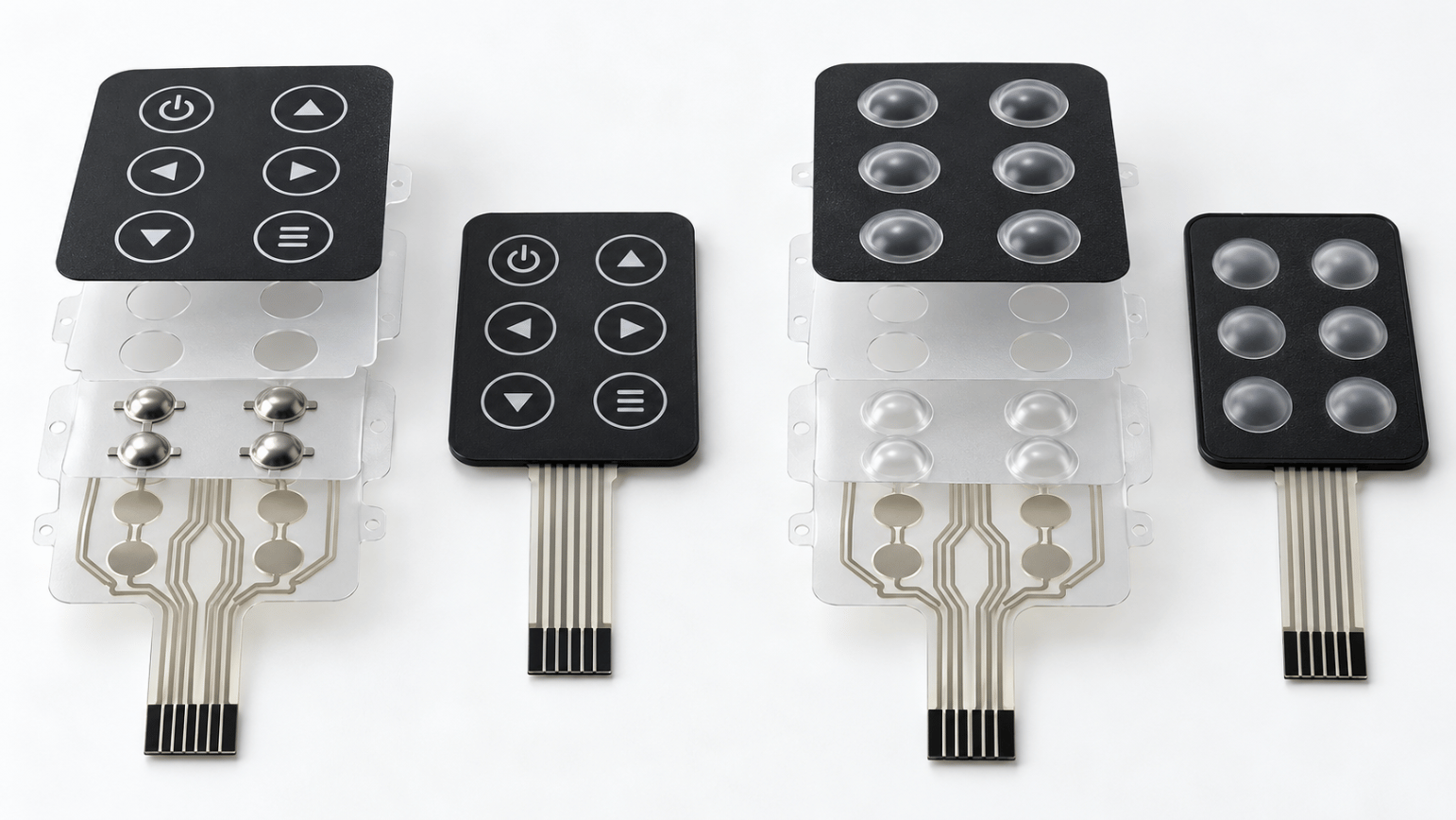
Construction decides how the switch feels, how long it lasts, and what it costs. It is the first thing to settle and the hardest to change after tooling.
Questions to ask:
- Do you offer metal dome, polydome, and non-tactile constructions
- What actuation force can you hold, and how tightly can you control it
- How many actuations is each construction rated for
- Which construction do you recommend for our application and why
- Can the click be felt through gloves
A manufacturer who knows this work will answer in numbers. Metal domes are typically specified in the 180 to 700 gram range depending on dome geometry, and are commonly rated for 1 to 5 million actuations, with a sharp click an operator can feel through a glove. Polydomes emboss the tactile shape directly into a layer already in the stack, exceed a million actuations, and usually cost 15 to 30 percent less in larger orders.
Neither is better. One of them is right for your application. For a full engineering breakdown, see our comparison of metal dome vs polydome membrane switches.
Graphic Overlay and Printing Questions
The overlay is the layer your customer actually sees and touches. It carries the branding and takes all the wear.
Questions to ask:
- What overlay materials and thicknesses do you offer
- Can you match our brand colors, and how do you control color across production runs
- Can you emboss, deboss, or add selective texture and gloss
- Do you print windows, deadfronts, and translucent legends
- Do you build the overlay and the switch as one assembly
Repeatable color matching across runs is a process question, not a printing question. Ask how they control it. A manufacturer who also builds graphic overlays and labels in-house will give you one assembly and one accountable party rather than two vendors blaming each other over a color shift.
Backlighting and Illumination Questions
Backlighting is where membrane switch projects most often get more expensive than planned, because it is specified late.
Questions to ask:
- What backlighting options do you offer
- Can you achieve even brightness across a large keypad
- How do you handle color, dimming, and current draw
- Can you help us choose if we have not specified backlighting yet
That last question matters more than it looks. Many engineering teams are not membrane switch specialists and do not know what features are available. One manufacturer we worked with came to us in exactly that position, and partnering on the backlighting design saved their team more than 20 hours of engineering time and produced a solution ready for production.
Environmental and Durability Questions
Field conditions, not lab conditions, decide whether a membrane switch survives.
Questions to ask:
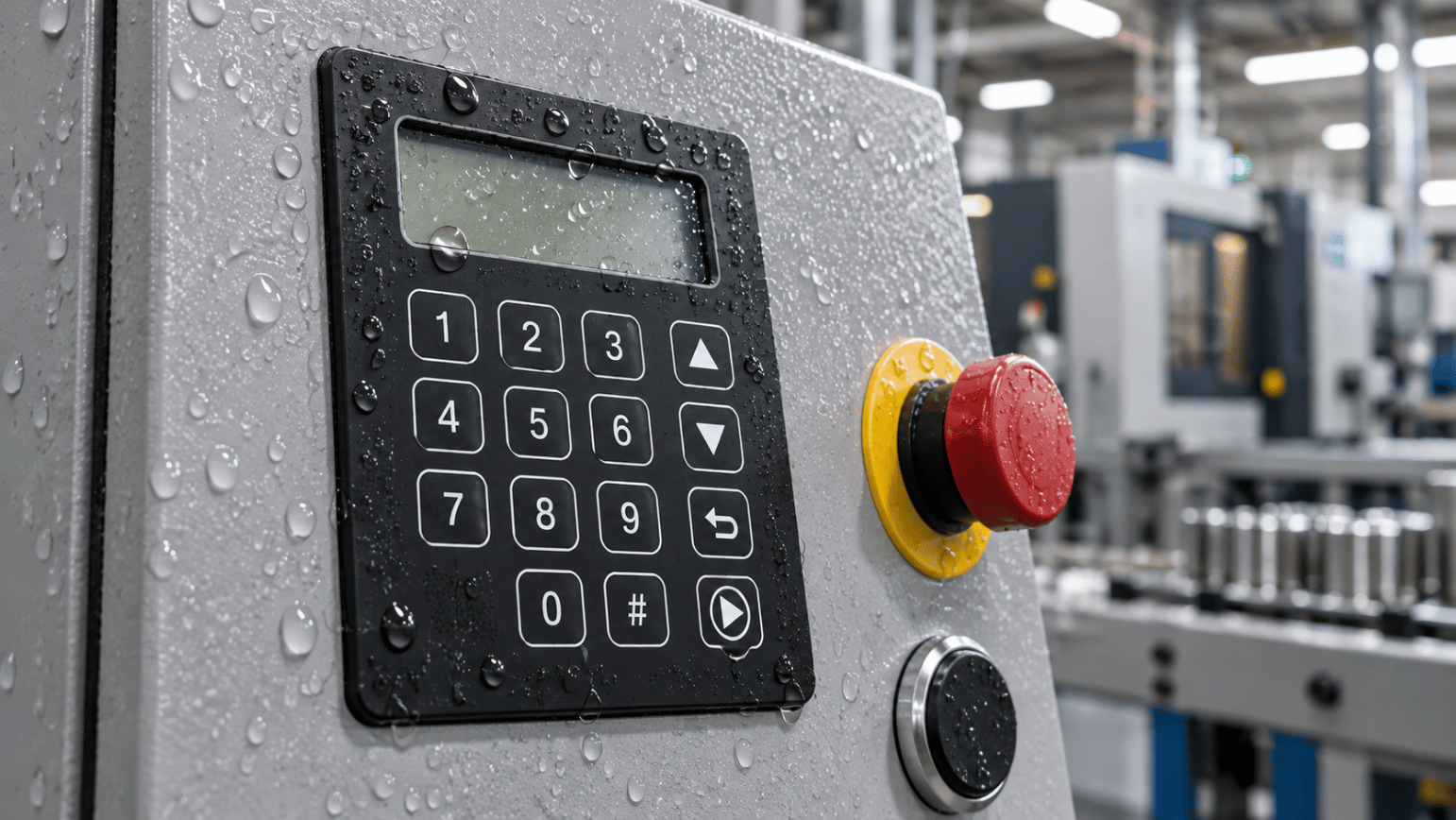
- What IP ratings can you meet for our environment
- How does the switch handle washdown, chemicals, and cleaning agents
- What is the operating temperature range
- How do you seal edges, connectors, and tail exits
- Will the overlay hold up to UV exposure
Sealing is usually where a switch fails first. Ask specifically about the tail exit and the perimeter seal, not just the front surface. In wet or washdown environments, note that polydomes contain no metal to corrode, which is often why they are specified there.
Design and Engineering Support Questions
A good manufacturer should make your design stronger, not just build what you send.
Questions to ask:
- Do you offer design for manufacturability review
- Can you work from a sketch, or do we need finished artwork
- What files and tolerances do you require
- Will you flag risks before tooling
A manufacturer that offers real design input will quietly save you money and rework on every order. The best time to catch a problem is before tooling exists.
Tolerance, Quality, and Certification Questions
Tolerances and certifications are where vague promises turn into measurable expectations.
Questions to ask:
- What dimensional and printing tolerances do you hold
- Which certifications do you hold
- Do you use UL-recognized materials
- What inspection and testing do you perform on every lot
- Can you provide certifications, traceability, and inspection reports
Certification is a gating question in medical and defense work, so ask early. Butler Technologies is ISO 9001:2015 certified with UL and CSA approvals, documented on our certifications and approvals page.
Prototyping, Production, and Lead Time Questions
A great prototype means nothing if the manufacturer cannot scale it.
Questions to ask:
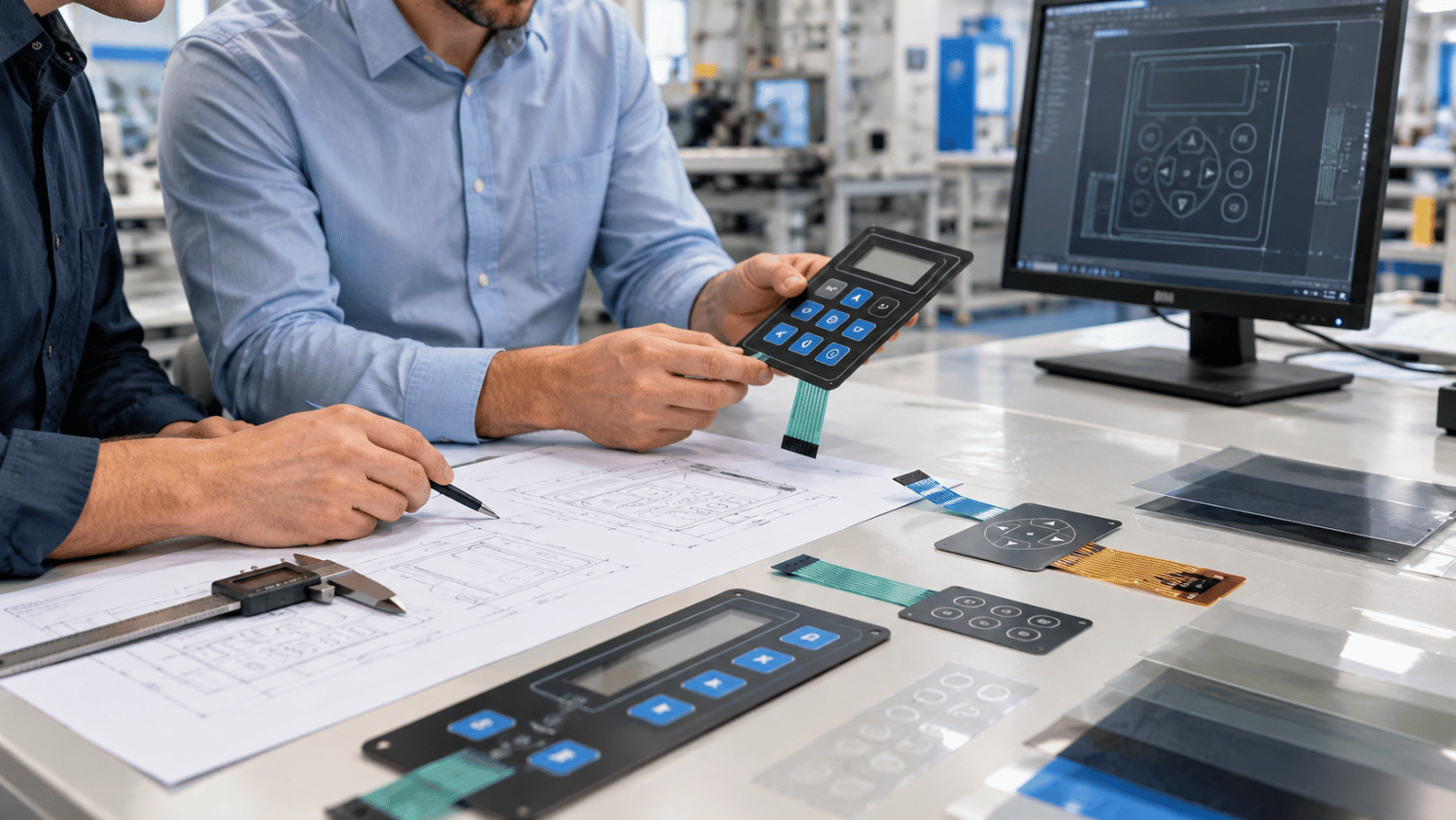
- Can we prototype and validate before committing to production tooling
- What are your lead times for prototypes and for production
- What is your minimum order quantity
- How do you handle rush orders and schedule changes
- Are you set up for full-scale production, not just samples
Ask specifically whether the same team handles prototype and production. Where prototyping and full-scale production sit under one roof, what you approve is what you receive.
Pricing and Total Cost Questions
The cheapest piece price is not always the cheapest order.
Questions to ask:
- How is your pricing structured
- What is included in the quote, including tooling, setup, and samples, and what is extra
- Do you offer pricing tiers at higher volumes
- How do you compare on total cost per delivered, accepted unit
- Do you support kitting, packaging, and scheduled releases
Supply Chain and Sourcing Questions
A membrane switch is only as reliable as the materials behind it.
Questions to ask:
- Where are your polyester films, adhesives, and conductive inks sourced from
- Do you manufacture in the USA or offshore
- How do you handle material shortages and substitutions
- Will you notify us before changing a material
That last question is the one most buyers forget. A silent material substitution is how an approved switch starts failing in the field. For OEMs that value tighter quality control and faster communication, working with a manufacturer in the USA is often the more practical choice.
Communication and Project Management Questions
Day-to-day communication often decides whether a project ships on time or quietly slips.
Questions to ask:
- Who is our main point of contact during the project
- How do you handle revisions, change orders, and approvals
- How quickly can we expect quotes, samples, and engineering responses
- How do you communicate delays, quality issues, and risks
Industry Experience and References
Experience in your specific industry is worth more than generic claims.
Questions to ask:
- What industries do you typically serve
- Can you share examples of similar membrane switch projects
- Can you connect us with references in our industry
- Have you supported interfaces for medical, industrial, defense, or heavy equipment applications
Red Flags to Watch For
- No DFM input, only price quotes
- Vague answers about actuation force, cycle life, or tolerances
- No certifications, inspection documentation, or traceability
- Pricing far below market without a clear reason
- Reluctance to commit to a lead time in writing
- Slow, evasive, or inconsistent communication
A Simple Membrane Switch Sourcing Checklist
- Construction and tactile feel confirmed in writing
- Actuation force and cycle life specified
- Overlay material, finish, and color control defined
- Is the mounting adhesive compatible with my device’s enclosure
- Backlighting specified, or confirmed as not required
- Environmental ratings and sealing approach confirmed
- Certifications verified
- Prototype, tooling, and approval plan agreed
- Lead times and MOQ confirmed
- Inspection and quality plan in place
- Communication, ownership, and escalation path clear
Applications Across OEM Manufacturing
Custom membrane switches are used across many industries:
- Medical devices and diagnostic equipment
- Industrial controls and HMIs
- Safety and personal test equipment
- Heavy equipment and utility vehicles
- Military and defense interfaces
- Appliances and consumer products
How to Choose the Best Membrane Switch Manufacturer
The best manufacturer is not always the largest or the cheapest. It is the one that aligns with how you build products.
Look for a partner with real engineering depth and DFM support, in-house printing, tooling and assembly, construction expertise across metal dome and polydome, quality systems built for regulated industries, scalability from prototype to volume, and honest communication backed by references.
For a closer look at how these assemblies are engineered, see our guide on custom capabilities.
How We Support OEMs at Butler Technologies, Inc. (BTI)
At Butler Technologies, Inc. (BTI), custom membrane switch manufacturing is built around OEM and engineering needs, from design through volume.
Capabilities include:
- Custom membrane switch and keypad manufacturing in Butler, Pennsylvania
- Metal dome and polydome construction, with backlighting, embossing, and selective texture
- Integration with graphic overlays, labels, dials and gauges, and touch screens
- Design support, DFM review, and prototyping before production tooling
- ISO 9001:2015 certified, with UL and CSA approvals
- Single-partner support from concept through full-scale production
Sourcing a custom membrane switch? Request a quote from Butler Technologies.
Key Takeaways
- The questions you ask before ordering decide how every switch performs in the field
- Construction drives feel, cycle life, and cost, so settle it before tooling
- Metal dome suits precise, high-feedback, glove-operated designs. Polydome suits softer feel, large keypads, washdown environments, and lower cost at volume
- Certifications, sealing, and material change notification matter more than piece price
- A short, structured checklist protects budget, schedule, and field performance
Frequently Asked Questions (FAQs)
What questions should I ask a membrane switch manufacturer before ordering?
Cover construction and tactile feel, actuation force and cycle life, overlay material and color control, backlighting, environmental ratings and sealing, DFM and design support, tolerances and certifications, prototyping, lead times and MOQ, pricing and total cost, supply chain, and communication. A strong manufacturer answers all of these clearly and in writing.
How do I choose a custom membrane switch manufacturer?
Choose based on engineering depth, in-house printing and assembly, expertise across both metal dome and polydome construction, quality systems and certifications, scalability from prototype to full-scale production, and proven references in your industry. Price is one factor, never the deciding one.
Metal dome or polydome, which is better for my application?
It depends. Metal domes give a sharper, more distinct click, a customizable actuation force commonly in the 180 to 700 gram range, and a rated life of 1 to 5 million actuations. Polydomes give a softer, quieter feel, exceed a million actuations, contain no metal to corrode in washdown environments, and typically cost 15 to 30 percent less in larger orders.
How long does a membrane switch actually last?
It depends on construction and use. Metal dome switches are commonly rated for 1 to 5 million actuations, and polydome switches can exceed 1 million. Real-world life also depends on sealing, environment, and how evenly the operator actuates the key, which is why environmental ratings should be specified alongside cycle life.
Why choose a membrane switch manufacturer in the USA?
A USA-based manufacturer such as Butler Technologies typically offers tighter quality control, faster communication, shorter lead times, stronger compliance support, and easier collaboration on design, DFM, and full-scale production, which often outweighs small differences in offshore unit price.