Full-Scale Production
Full-Scale production is the complete manufacturing process that takes your product from design through printing, fabrication, and final assembly, ready for deployment at scale. Every stage is managed in-house under ISO-certified quality systems, ensuring consistency, quality, and accountability from concept to completion.
Butler Technologies, Inc. offers full-scale production, taking your products from design through printing to assembly. Whether you require graphic overlays, membrane switches, simple labels, or fully functional printed electronics, we are capable of meeting your needs.
Our capabilities include:
Screen Printing
Digital Printing

2D Cutting
Value-Added Assembly
Quality Inspections
NEED MORE THAN A STANDARD BUILD?
Screen Printing
Screen printing is a technique that uses mesh to transfer ink onto a substrate. Print screens are prepared using stainless steel or high-tension, low-elongation polyester mesh. The desired image or pattern is created using a light-reactive emulsion, a capillary film, or a combination of both processes.
Depending on customer requirements, our screen printing services may use UV-curable, solvent-based, plastisol, and water-based inks and coatings. Special-effect inks and surface finishes are applied to enhance the visual and tactile qualities of the finished product. Conductive and dielectric insulating inks are also used in membrane switches and printed electronic products.
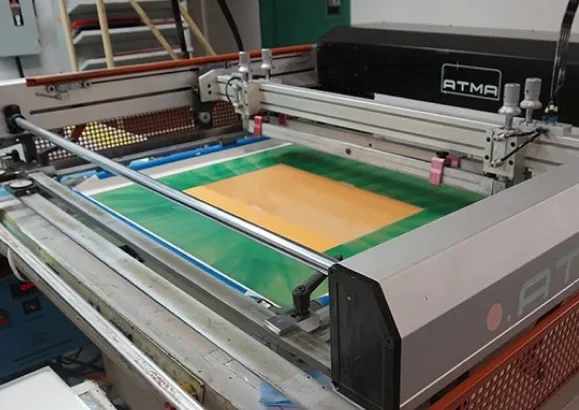
Key advantages of our screen printing services include:
- Better color accuracy and matching
- Able to print fluorescents, metallics, and chrome colors
- Ideal for larger order quantities
Screen and digital print processes can be combined to expand service offerings and increase production flexibility. This approach helps balance durability, detail, substrate requirements, and visual finish based on the needs of each application.
Digital Printing
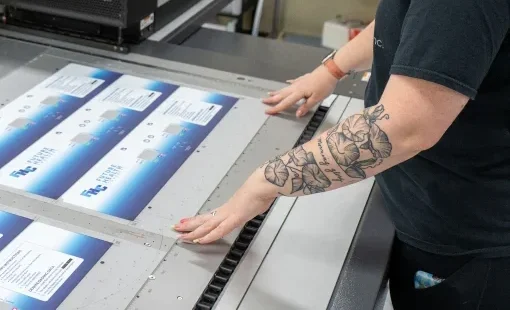
Digital printing is a technique that transfers digital files to a substrate. We offer multiple options for digital printing, including the SwissQprint Impala 3, Acuity Advance HS Printer, and the Roland Sol-Jet XC-540. Most options can handle large-formatted projects, but printed designs are typically restricted by the size of the substrate material.
Our digital printing services are well-suited for projects requiring detailed graphics, color variation, a fast turnaround, or lower-volume production. This method is commonly used for graphic overlays, gauges, labels, signage, prototypes, and other user interface components where design accuracy and visual quality are important.
Key advantages of our digital printing services include:
- Cuts screen use
- Easier artwork revisions
- Faster design changeovers
- No full tooling needed
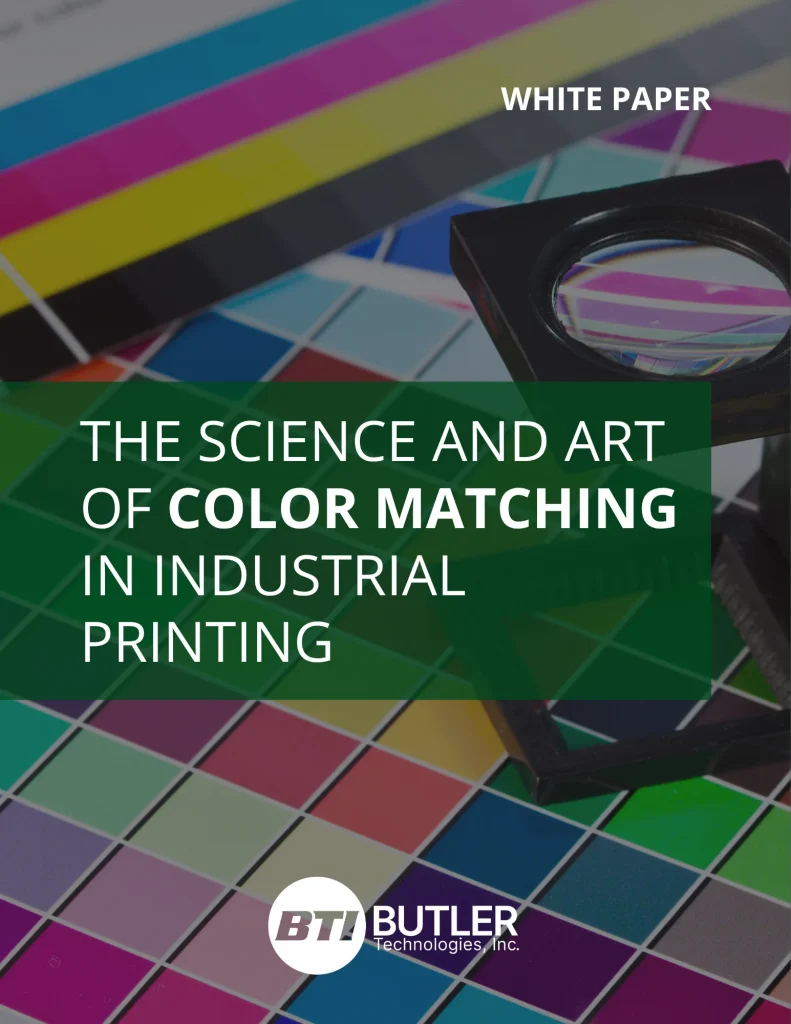
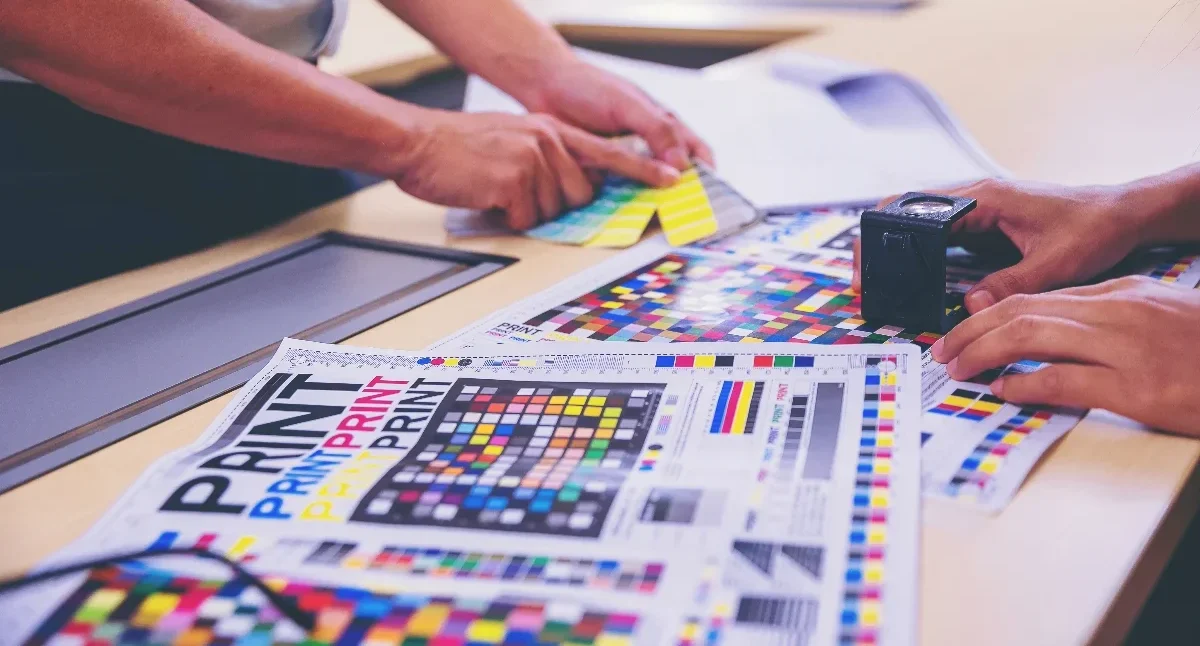
To support consistent results, computer-based formulation, spectrophotometer measurement, and transmission densitometer tools are used to precisely match and control color throughout the print process. We hold ourselves to Delta E standards of ≤2.
2D Cutting
Our 2D cutting capabilities enable us to produce gaskets, ESD shields, and flame-retardant insulators for a wide range of applications. Whether your project requires closed-cell foam, neoprene, copper, aluminum, polyester, PVC, or other specialty materials, we can support your precision cutting needs with the right method for the material and the required tolerance.
Laser Cutting
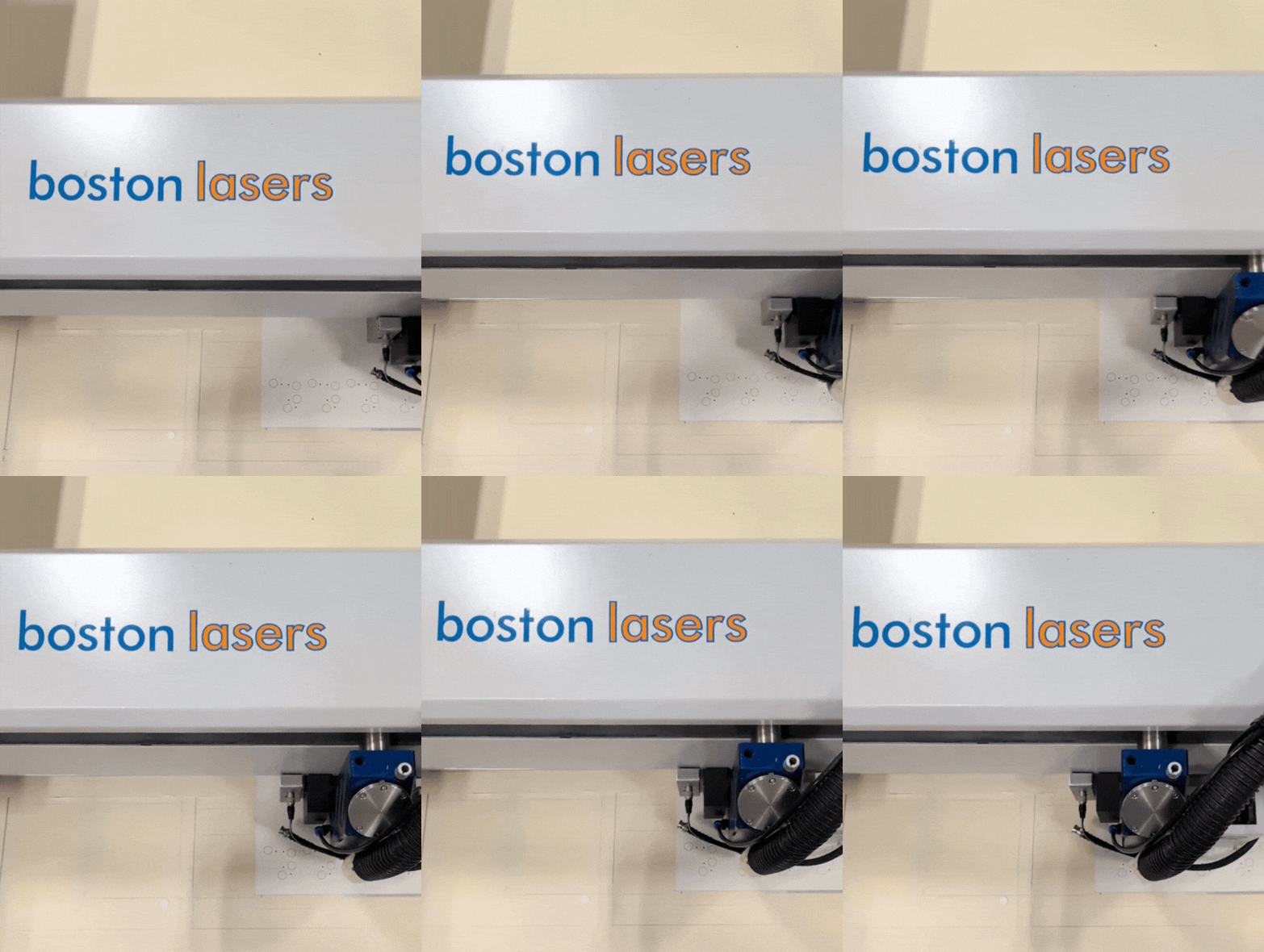
- Laser cutting can generally produce finished cut features within +/-0.002” and a cut-to-print tolerance of +/-0.005”.
- Laser cutting does not require hard or fixed tooling and is a great help in expediting the prototyping process.
Die Cutting
- Tolerance on die-cut features ranges from +/-0.010” on materials 0.020” thick or less to +/-0.015” for materials greater than 0.020” thick.
- Typical cut-to-print tolerance of +/-0.010” can be held depending on material thickness.
Drag Knife
- An ideal choice for heat-sensitive applications or materials that emit toxic fumes (PVC).
- Typical cut-to-print tolerance of +/- .005” can be held depending on material thickness.
NOT SURE WHICH CUTTING METHOD FITS?
Value-Added Assembly
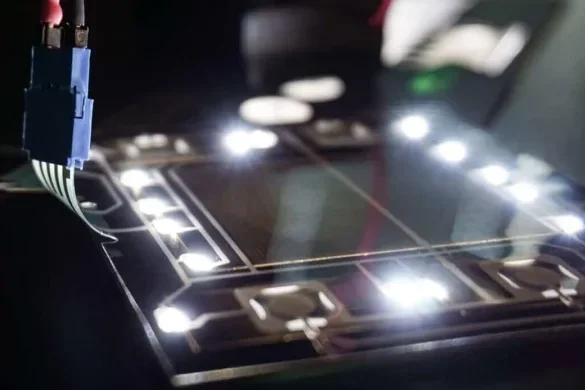
We have the equipment and expertise to handle your assembly needs. From the lamination of adhesives, spacer materials, and overlaminate films to the surface mounting of LEDs and other SMD components, to the installation of Berg and Nicomatic electrical connectors, we have what you need, including:
- Ability to handle cold and heated lamination processes.
- Both semi-automatic and manual crimping equipment allow the installation of electrical connectors and BERG (2.54mm pitch) and Nicomatic (2.54mm and 1.27mm pitch).
- Electrical testing of membrane switches and other printed electronic assemblies is handled using multiple Banair Darren, and Dataswitch electrical testers.
Streamline
Supply Chains
Butler Technologies can help reduce supply chain complexity through value-added assembly services that bring lamination, connector installation, component mounting, and testing into one controlled workflow. This integrated approach helps reduce vendor handoffs, improve production consistency, and simplify the path from individual components to finished assemblies.
In one medical device project, Butler Technologies helped cut the customer’s vendor count in half through integrated value-added assembly support.
For more details, explore our client case study.

Quality Inspections
Quality inspections are built into every stage of the manufacturing process at Butler Technologies, Inc. Our team checks components for visual conformance, electrical functionality, dimensional accuracy, and adherence to customer specifications to help ensure consistent production quality.
We also support standardized inspection requirements across different industry quality systems, helping OEMs maintain confidence from first article approval through ongoing production.
Quality inspection systems
- FAI
- PPAP
- Customer Specified Requirements
Industries We Serve
Our products and capabilities support a wide range of industries, each requiring precise manufacturing, reliable performance, and consistent quality across every application.
Why Choose Butler Technologies
ISO 9001 Certified
On-Time Delivery
Design to Production
Supply Chain Simplified
Expert Team
Custom Capabilities
EVERY CLAIM ABOVE IS AUDITED
What Our Clients Say


 Trustindex verifies that the original source of the review is Google.
 Trustindex verifies that the original source of the review is Google.
 Trustindex verifies that the original source of the review is Google.
 Trustindex verifies that the original source of the review is Google.
 Trustindex verifies that the original source of the review is Google.
 Trustindex verifies that the original source of the review is Google.
 Trustindex verifies that the original source of the review is Google.
 Trustindex verifies that the original source of the review is Google.
 Trustindex verifies that the original source of the review is Google.
 Trustindex verifies that the original source of the review is Google.
Frequently Asked Questions
What does full-scale production include?
Full-scale production includes the key manufacturing steps needed to take a product from approved design to finished parts, including printing, fabrication, 2D cutting, value-added assembly, electrical testing, and quality inspections.
When should I choose screen printing instead of digital printing?
Screen printing is best for larger production runs, specialty inks, durable graphics, and consistent color matching. Digital printing is better for small to medium runs, detailed graphics, faster design changes, and product variations.
What 2D cutting methods does Butler Technologies use?
Butler Technologies uses laser cutting, die cutting, and drag knife plotter cutting to support different materials, tolerances, and production needs.
Can Butler Technologies handle assembly after printing and cutting?
Yes. Butler Technologies provides value-added assembly services including lamination, connector installation, LED and SMD component mounting, and electrical testing for membrane switches and printed electronic assemblies.
How does Butler Technologies support quality during production?
Quality inspections are built into the manufacturing process, including visual conformance checks, electrical functionality testing, dimensional review, and customer-specified requirements such as FAI, PPAP, and CSR.
What is Delta E, and why does it matter for color matching?
Delta E is the measure of visible difference between a target color and the printed result. Butler Technologies holds to Delta E standards of 2 or less, a level generally considered imperceptible to the average viewer. Color is controlled using a computer-based formulation system, a spectrophotometer, and a transmission densitometer, which keeps brand colors consistent across production runs and across different products in the same family.
What are FAI and PPAP, and can Butler Technologies provide them?
Yes. FAI, or First Article Inspection, is a documented measurement of the first part produced against the drawing. PPAP, or Production Part Approval Process, is the documentation package proving a process can produce conforming parts consistently, and is standard in automotive supply. Butler Technologies supports both, along with customer-specified inspection requirements.
Can screen printing and digital printing be combined on the same part?
Yes. Screen and digital print processes can be combined on a single part, which allows a design to use screen printing where color accuracy or metallic and fluorescent inks are needed, and digital printing where gradients, photographic detail, or serialised data are needed.
Where to start
With all the different customization options and use cases, it might seem overwhelming.
Contact our expert team today and take the pressure off yourself.