What Is a Single-Zone Force Sensing Resistor and How It Works

Summary
A single-zone force sensing resistor (FSR) is a thin, printed sensor with one active area whose resistance drops as force is applied. It reports total force on that zone as a single output, making it a low-cost, low-profile way to detect presence or measure pressure. This blog explains how it works, how it is built, and where it fits.
Types of Gasket Cutting Methods in Precision Manufacturing
Summary
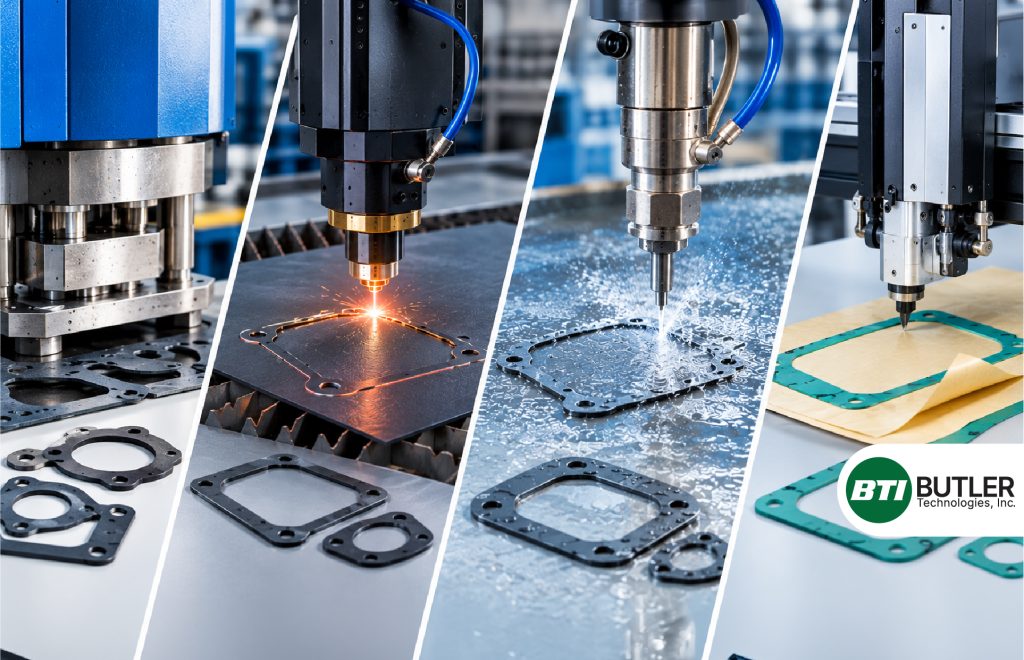
A gasket only seals if it is cut accurately, and the cutting method decides that accuracy. This blog compares the main gasket cutting methods used in precision manufacturing: die cutting, laser, waterjet, and kiss cutting, and explains how to match the method to material, tolerance, geometry, and volume.
What Is Engineering Design in Printed Electronics
Summary
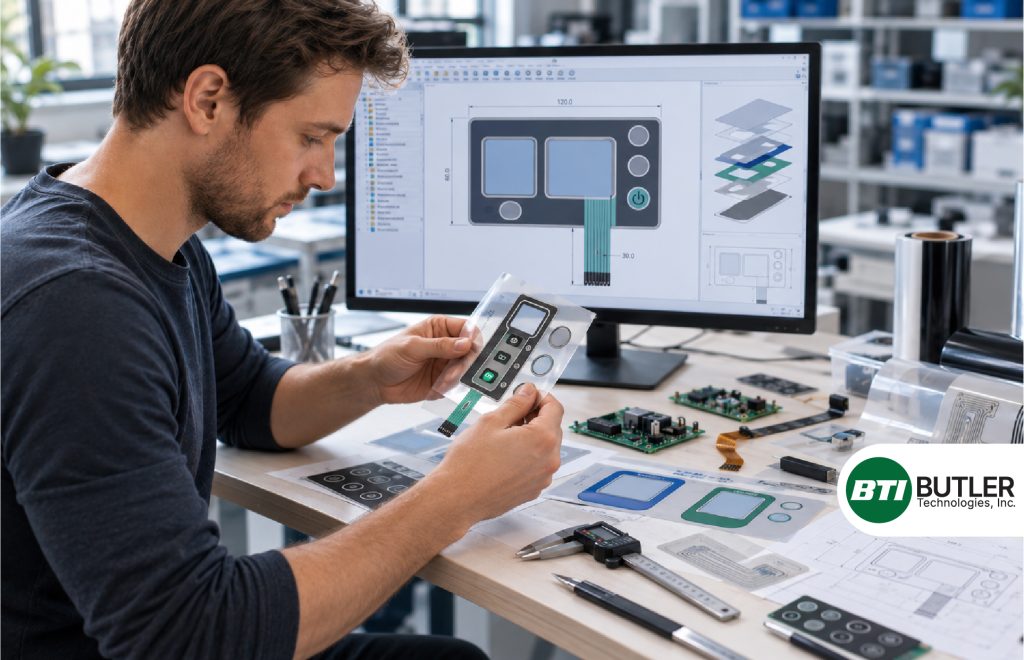
Choosing a membrane switch manufacturer is the stage where a control panel concept becomes a part that has to survive years of presses, cleaning, sunlight, and temperature swings. It covers construction and tactile feel, actuation force and cycle life, overlay material and color control, backlighting, sealing, certifications, prototyping, and total delivered cost, and it is where most of a switch’s reliability and price are decided.
Key Questions to Ask Your Custom Touch Screen Manufacturer

Summary
Most touch screen problems begin before production, when the wrong technology, optics, environmental requirements, or manufacturing partner is chosen. For OEMs evaluating a custom touch screen manufacturer, asking the right questions early helps protect performance, durability, quality, lead times, and total cost.
Types of Force Sensing Resistor Designs and How They Differ
Summary
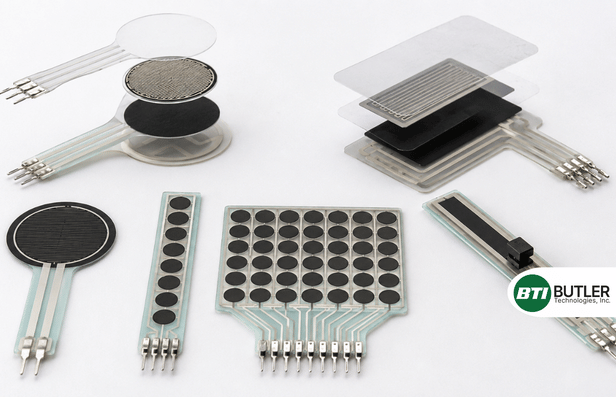
Force sensing resistors are thin, flexible sensors that change resistance as force is applied. They can be built in different construction modes and configurations depending on the force range, sensitivity, number of sensing points, form factor, and cost required for the application.
What Is Value-Added Assembly? A Guide for OEMs
Summary
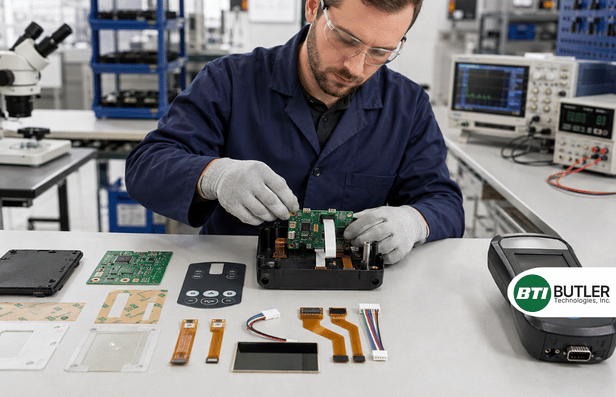
Value-added assembly is a manufacturing model where a single partner handles fabrication, sub-assembly, integration, testing, and logistics for an OEM’s product or component, rather than just one step of the process. For OEMs working with printed electronics, membrane switches, overlays, sensors, and custom interfaces, this model reduces vendor sprawl and turns assembly into a strategic advantage.