Custom Labels
What Are Custom Labels?
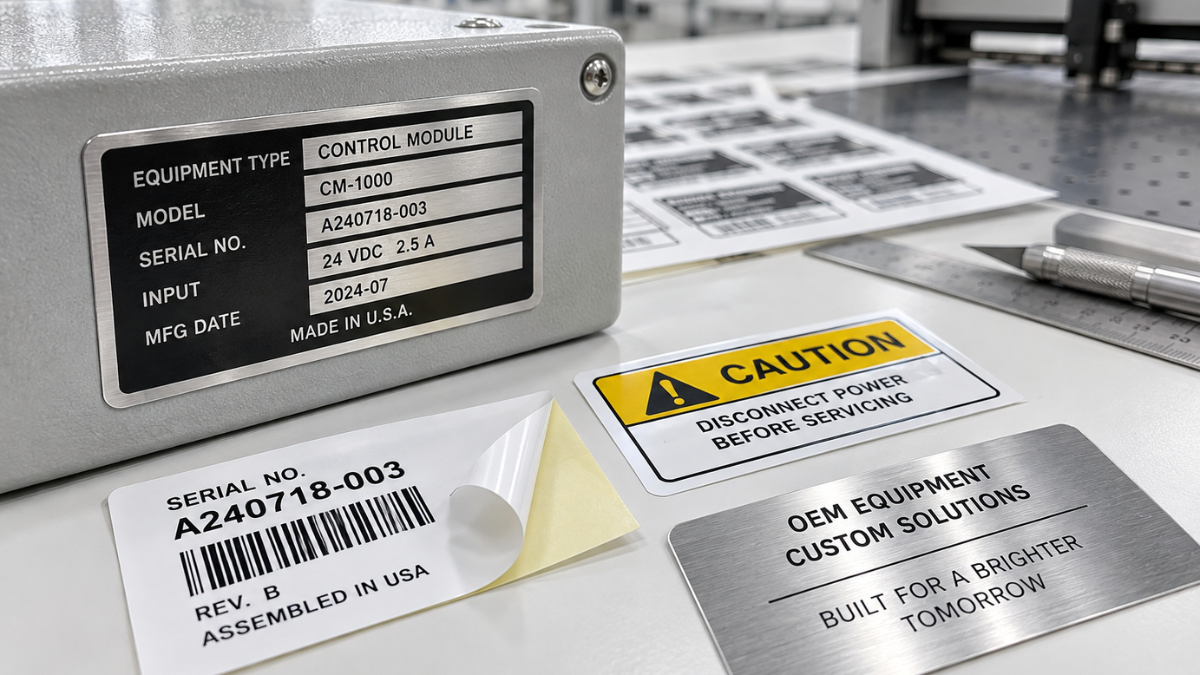
Custom labels are adhesive-backed printed graphics used to identify products, communicate information, display branding, or satisfy regulatory requirements.
Butler Technologies manufactures labels using materials such as polyester, vinyl, foil, and paper depending on the application’s environmental and performance requirements.
Labels can be produced using screen printing, digital printing, or a combination of both processes and are precision-cut to custom shapes and sizes.
LOOKING FOR MORE THAN STANDARD LABELS?
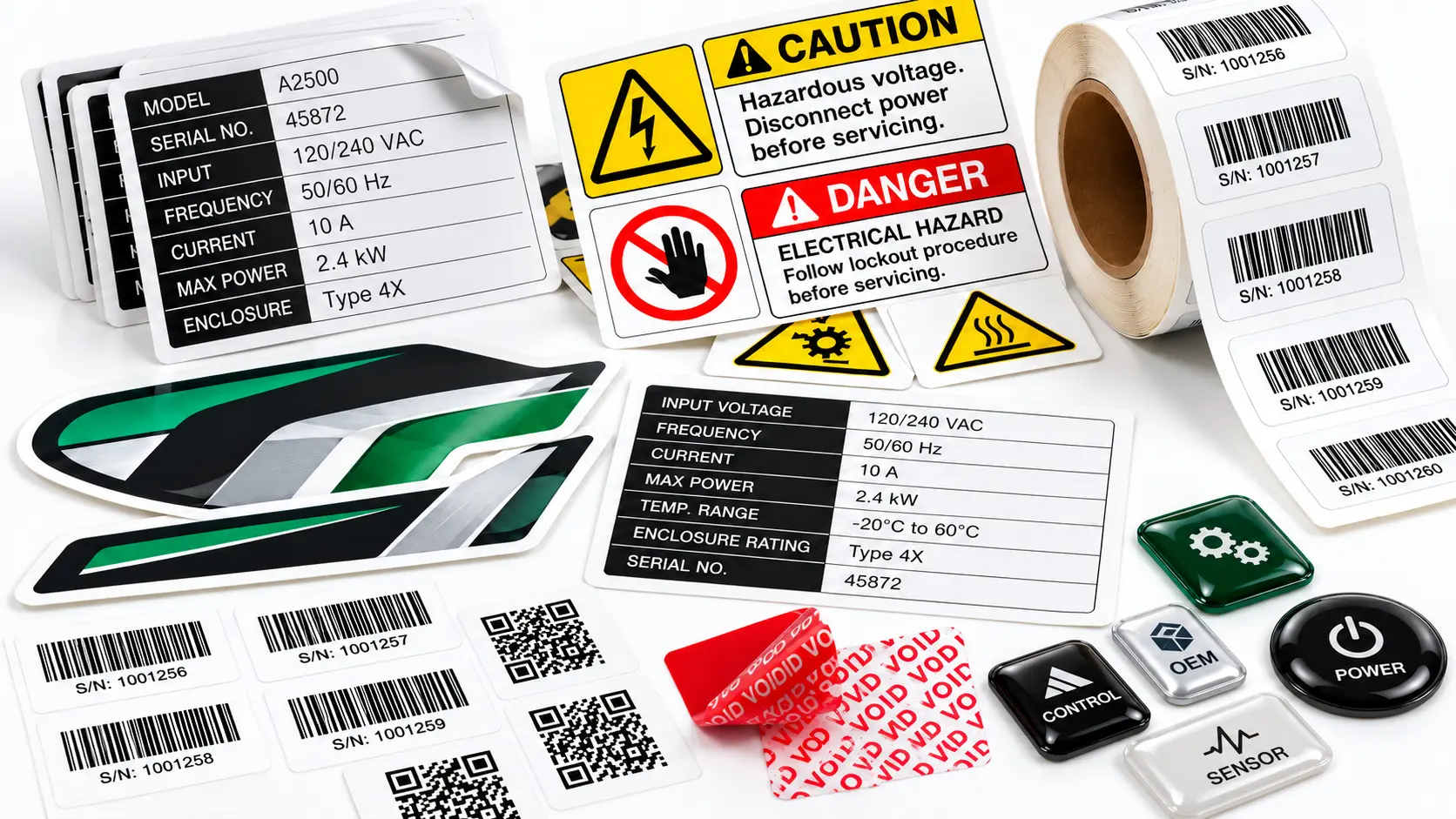
Types of Labels
- Product Identification Labels: Display product information, serial numbers, model numbers, branding, and manufacturing details.
- Safety & Warning Labels: Communicate hazards, operating instructions, and safety information to help users interact safely with equipment and devices.
- Branded Decals: Promote brand recognition with high-quality custom graphics and logos designed to maintain their appearance over time.
- Roll Labels: Ideal for high-volume applications that require efficient dispensing and application during manufacturing processes.
- UL Labels: For products requiring certification markings, Butler Technologies participates in UL labeling programs and can manufacture labels that meet applicable UL requirements and approved label systems.
- Barcode Labels: Add sequential barcodes or QR Codes to your labels to easily manage your inventory or to direct customers to your website or product information site.
- Urethane Domed Labels: Clear urethane doming resin can be added to vinyl and polyester labels to provide a distinctive 3D “domed” appearance that provides a UV, moisture, chemical, and abrasion resistant coating.
- Tamper-Evident / Tamper Proof Labels: Are designed to show visible, irreversible evidence of removal or tampering, using VOID patterns, destructible vinyl, or custom security cuts to protect your products, warranties, and brand.
Do You Need a UL Label?
Many products require labels that meet specific regulatory or certification requirements. Butler Technologies participates in UL labeling programs and can help determine the appropriate label construction, materials, adhesives, and printing methods needed for your application.
Our team works with customers to ensure labels meet the performance and compliance requirements of the finished product.
Materials
The material selection is the key first step to building a beautiful and long-lasting labels. Standard labels are constructed using adhesive-backed thin films such as vinyl, polyester, aluminum foil, and paper.
Unique Finishes
Typical thin-film, adhesive-backed vinyl and polyester materials are available in matte or gloss white, clear, chrome, matte, or brushed silver finishes.
Durability
Clear, gloss, or matte finish polyester film can be added to standard labels to improve their environmental and operational durability.
Environmental Resistance
Durable labels require more robust materials, such as thick-film polycarbonate and polyester, that provide better environmental and operational durability.
Adhesive
Durable labels are paired with high-performance pressure sensitive adhesives designed to adhere to various high and low surface energy materials such as ABS, Lexan, Polypropylene, and Powder-coated metals.
Download the Material Selection Chart to get started on your project
Industries We Serve
Our products and capabilities support a wide range of industries, each requiring precise manufacturing, reliable performance, and consistent quality across every application.
Why Choose Butler Technologies
ISO 9001 Certified
On-Time Delivery
Design to Production
Supply Chain Simplified
Expert Team
Custom Capabilities
EVERY CLAIM ABOVE IS AUDITED
What Our Clients Say
Frequently Asked Questions
What information should I provide when requesting a custom label quote?
Provide your label dimensions, expected quantity, intended application surface, operating environment, and available artwork. If your project involves barcodes, serial numbers, or specific compliance requirements, include those details as well. This helps determine suitable materials, adhesives, printing methods, and production requirements.
Can custom labels adhere to textured or powder-coated surfaces?
Yes, labels can be designed for textured or powder-coated surfaces, but adhesive selection is important. Surface texture, coating chemistry, cleanliness, and operating conditions can affect adhesion. Testing the proposed label construction on the actual substrate is recommended before production.
Can each label contain a different serial number or barcode?
Yes, variable-data printing can produce labels with unique serial numbers, barcodes, or QR codes. This is useful for equipment identification, inventory tracking, and product traceability. The required numbering sequence, data format, and barcode specifications should be established before production.
Is there a minimum order quantity for custom printed labels?
Minimum order quantities may depend on the label material, printing process, dimensions, finishing requirements, and whether custom tooling is needed. Providing your estimated annual usage and initial order quantity can help BTI evaluate a suitable manufacturing approach. Contact the team for project-specific quantity requirements.
How can I verify that a custom label will perform in my application?
Label performance can be evaluated through application-specific testing, including adhesion, abrasion, chemical exposure, temperature, and UV resistance where relevant. The appropriate tests depend on the product’s operating environment and applicable requirements. Testing representative samples on the intended surface helps reduce the risk of label failure.
Where to start
With all the different customization options and use cases, it might seem overwhelming.
Contact our expert team today and take the pressure off yourself.